
Elon Musk

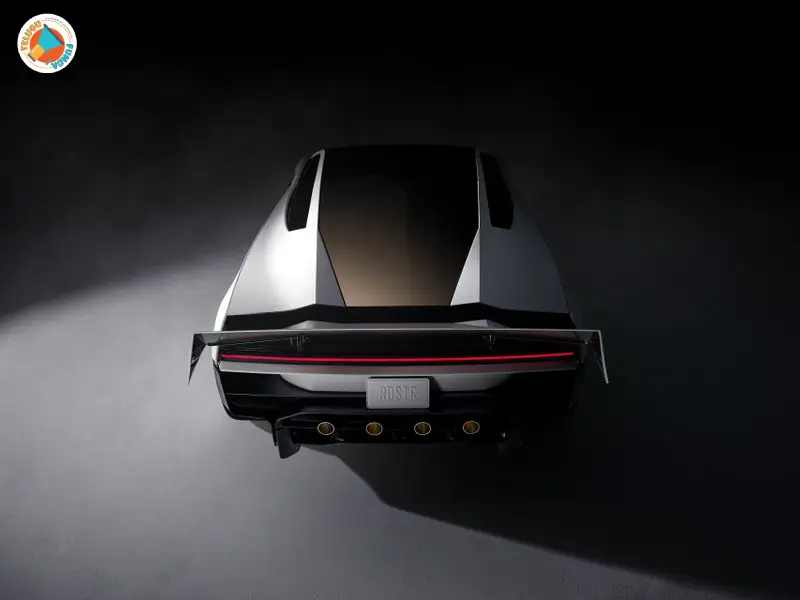
Elon Musk’s flying Tesla car concept has sparked massive curiosity among automobile enthusiasts. Tesla’s next-generation Roadster could feature SpaceX-inspired technology capable of delivering extraordinary performance and even flying-like stunts. While the idea sounds straight out of a science-fiction movie, turning it into a practical and safe vehicle remains a major challenge.

Tesla’s next-generation Roadster has been in the spotlight since it was first unveiled in 2017. The electric supercar has faced multiple delays, but expectations remain high because of Elon Musk’s ambitious vision. The company has discussed incorporating SpaceX-inspired technology, potentially using advanced propulsion systems to deliver incredible acceleration and performance. These possibilities have raised an exciting question: Could a Tesla car one day perform spectacular moves that look like flying?

However, developing a vehicle capable of such extraordinary stunts is no easy task. Engineers must overcome several challenges involving safety, stability, engineering complexity and regulatory approvals. The cost of developing and implementing this technology could also determine whether such a vehicle becomes commercially viable. Although the concept has generated considerable excitement, a fully flying Tesla car has not yet been demonstrated as a production-ready vehicle.

Tesla’s Roadster project has experienced repeated delays since its original announcement, and its production timeline remains uncertain. While 2028 has been discussed as a potential production target, customers will have to wait for official confirmation regarding its launch and final specifications.

Elon Musk has repeatedly pushed the boundaries of electric vehicle technology, and the Roadster could become another ambitious milestone for Tesla if the company delivers on its promises. For now, the prospect of a flying Tesla remains an exciting possibility rather than a confirmed reality. Whether this futuristic vision becomes a practical vehicle or remains an ambitious experiment is something the automobile industry will be watching closely.

Follow Telugu Funda on trending Social Media Platforms for more Cinema, OTT, Political, And Sports updates.
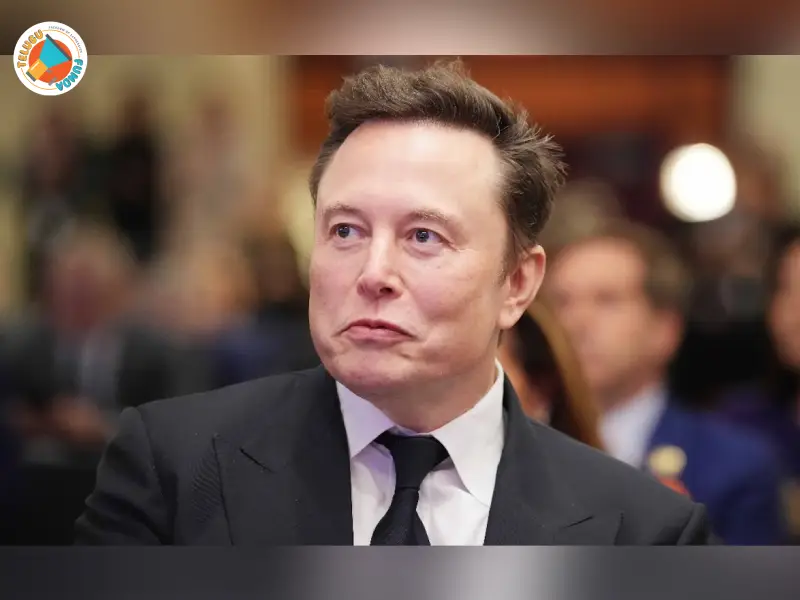
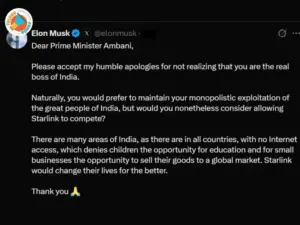
Elon Musk has sparked another political storm in India with a sarcastic remark aimed at Mukesh Ambani over the delay in launching Starlink’s satellite internet services. Addressing Prime Minister Narendra Modi as “Prime Minister Ambani” in a post on X, the SpaceX chief questioned the influence of Reliance Industries chairman Mukesh Ambani over India’s telecom sector. The comment has triggered a fresh debate over corporate influence, competition and Starlink’s entry into the Indian market.

The controversy comes as Starlink continues to await the necessary clearances to begin commercial operations in India. Musk has repeatedly highlighted the potential of satellite internet to connect remote villages and underserved regions where conventional broadband services remain limited. According to his argument, improved connectivity could help students access online education and enable small businesses to reach customers worldwide.

However, the Indian government has pushed back against allegations of unfair treatment. Telecom Minister Jyotiraditya Scindia has maintained that India does not permit monopolies and that satellite internet providers must complete the prescribed approval process before launching their services. The government has also emphasised the importance of meeting regulatory and security requirements.

The issue has taken a sharper political turn with Congress leader Rahul Gandhi joining the exchange. After Musk questioned whether Ambani was the real power behind India’s telecom policies, Rahul responded, “Welcome to India, Elon. Wait till you discover the other guy.” Musk thanked Rahul for his response and described the situation as troubling, further intensifying the online discussion.

Social media reactions have been divided. While some users have supported Musk and questioned the delay in Starlink’s launch, others have criticised his remarks as an attack on Indian businesses. Rahul Gandhi’s intervention has also given the controversy a political dimension, with the Opposition raising questions about the relationship between major corporations and the Modi government.

Meanwhile, the government’s position remains that Starlink and other satellite internet operators must comply with India’s regulatory framework before offering commercial services. With the exchange between Musk and Rahul Gandhi drawing fresh attention, the Starlink controversy has evolved beyond a simple business issue. The debate now centres on competition in the telecom sector, the influence of major business groups and whether foreign satellite internet companies can compete on a level playing field in India.

Follow Telugu Funda on trending Social Media Platforms for more Cinema, OTT, Political, And Sports updates.
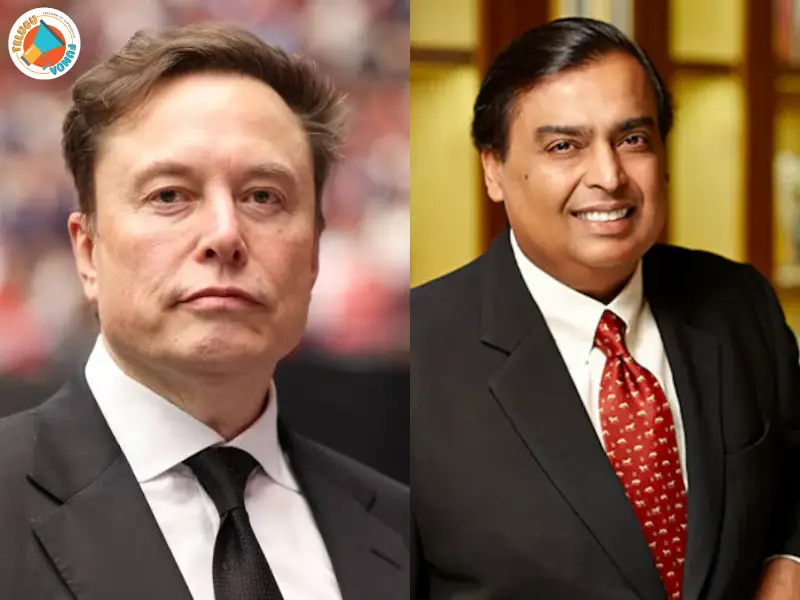
Elon Musk has triggered a fresh political and business controversy with his latest post on X, questioning whether Reliance Industries chairman Mukesh Ambani is the real power behind decisions in India. The post comes amid the ongoing debate over Starlink’s entry into the Indian market, with Musk seemingly stepping up pressure on the Indian government to grant his satellite internet company the necessary approvals.

For years, opposition parties have accused the Narendra Modi government of favouring corporate giants such as Mukesh Ambani and Gautam Adani. Now, Musk’s latest remarks have brought a similar argument into the spotlight, adding a new dimension to the Starlink licensing debate.

Over the past two days, Musk has reportedly used X to raise concerns about the delays in obtaining permission for Starlink’s services in India. He has alleged that certain business interests are attempting to block the company to protect their market positions. His comments have drawn a response from the government, and his subsequent reference to Ambani has further intensified the controversy.

However, the regulatory situation appears to be more complicated than Musk’s posts suggest. While Starlink has secured licences to operate in more than 165 countries and territories, its entry into India remains subject to regulatory and security requirements. The company’s claim that it has been complying with Indian rules for years does not automatically guarantee approval, particularly when national security clearances are involved.

Moreover, Starlink is not the only satellite internet operator awaiting the completion of regulatory procedures. Other companies operating in the Indian satellite communications sector have also been navigating similar approval processes.

Bharti Airtel chairman Sunil Mittal has reportedly stated that the company is awaiting regulatory approvals for its satellite internet venture, OneWeb. Reliance Jio’s satellite communications operations have also faced pending security and spectrum-related clearances. These developments complicate the argument that Starlink alone is being deliberately held back to protect Reliance’s business interests.

The key question, therefore, is whether Musk is highlighting a genuine regulatory concern or using public pressure to accelerate Starlink’s entry into one of the world’s largest telecommunications markets. His reference to Ambani has certainly made the debate more politically charged, but the pending approvals affecting other operators suggest that the issue cannot be viewed solely through the lens of a rivalry between Musk and Reliance.

Another major talking point is Musk’s suggestion that Starlink could help make high-speed internet more accessible in India. Although the company operates across numerous international markets, its pricing varies significantly from country to country. Satellite internet services can involve substantial subscription and equipment costs, making them more expensive than conventional broadband or mobile data plans in many markets.

Uganda has been cited as one of Starlink’s lower-priced markets, but even those tariffs may be considerably higher than the plans offered by Indian telecom operators such as Jio and Airtel. Consequently, Starlink’s arrival in India would not necessarily translate into cheaper internet for the average consumer.

The bigger challenge for Musk is to demonstrate that Starlink can offer a compelling combination of affordability, coverage and high-speed connectivity in India. Meanwhile, his latest post has turned a regulatory dispute into a broader debate over corporate influence, competition and the future of satellite internet in the country.

Whether Starlink receives the required approvals remains to be seen. For now, Musk’s Ambani remark has raised the political temperature, while the questions surrounding licensing, security clearances and pricing remain central to the company’s Indian ambitions.

Follow Telugu Funda on trending Social Media Platforms for more Cinema, OTT, Political, And Sports updates.
Recent Posts

Categories