
Reviews

Punchline

Suriya’s Unique Cop Act Makes This Crime Comedy An Entertaining One-Time Watch!

Storyline

A Murder Mystery With An Unexpected Twist!

DSP Prem Raj (Suriya) decides to resign from his police job, but his superior refuses to accept his decision, considering his impressive track record in solving complicated criminal cases. Instead, he is assigned a fresh murder investigation that bears similarities to the crimes committed by the notorious Perfume Killer (Tovino Thomas).

With the assistance of his colleague Maya (Nazriya Fahadh), Prem takes up the challenging investigation. However, an unexpected revelation about his own life adds another interesting dimension to the case. Who is behind the murders? What is Prem Raj’s secret? The answers unfold as the investigation progresses.

Positives

suriya’s Quirky Cop Character Steals The Show!

Director Jithu Madhavan brings a refreshing approach to the crime thriller genre by blending murder investigations with situational comedy and eccentric characters. The entertaining treatment prevents the narrative from becoming too dark or serious.

Suriya is perfectly cast as DSP Prem Raj. His styling, body language and relaxed approach to serious situations give his character a fresh appeal. His effortless comic timing is one of the film’s biggest strengths.

Nazriya Fahadh provides good support, and the chemistry and playful exchanges between her and Suriya generate several entertaining moments. The proposal scene inside the mortuary stands out as a major highlight.

Naslen makes an interesting impression as a first-time villain. His casual attitude and cool demeanour while committing crimes add a different flavour to the character.

Sushin Shyam’s background score elevates several sequences, while the cinematography adds visual polish to the narrative.

Negatives

A Familiar Investigation And An Underwritten Villain!

Despite the interesting presentation, the central murder investigation follows a fairly familiar template. A stronger and more convincing backstory for the young antagonist would have added emotional depth to the conflict.

The first half takes time to establish the characters and proceedings, resulting in a slightly slow narrative. The film works better in parts rather than maintaining consistent engagement.

The much-awaited confrontation between Suriya and the villain happens quite late. More interactions between these characters throughout the film could have created stronger tension and drama.

Lal entertains with his comic presence in the initial portions but largely disappears during the second half, only returning for the climax.

A few investigation sequences involving Suriya’s parents feel convenient, while Tovino Thomas gets limited screen time considering his potential.

Technicalities

Sushin Shyam’s BGM Adds The Much-Needed Energy!

Jithu Madhavan’s direction is decent, particularly in his attempt to combine crime investigation with quirky humour. Vineeth Augustian’s cinematography is neat, and Sushin Shyam’s background score is one of the film’s biggest technical strengths. Ajmal Sabu’s editing could have been crisper, especially during the first half, where certain portions feel stretched. The sound design is effective, and the production values are satisfactory. However, the dubbing for a few supporting characters could have been better.

Rating

3/5

Final Verdict

Suriya’s Different Cop Avatar Makes Scene A Decent Watch!

Scene offers a refreshing combination of crime investigation, eccentric characters and situational comedy. Suriya carries the film with an enjoyable performance, while Nazriya Fahadh and Naslen provide decent support. Although the slow first half, familiar investigation angle and underdeveloped villain backstory prevent it from becoming a gripping thriller, the second half delivers enough entertaining moments.

Overall, Scene is a different yet decent crime comedy that works as a one-time theatrical watch, especially for Suriya’s fresh cop avatar and Jithu Madhavan’s quirky storytelling.

Follow Telugu Funda on trending Social Media Platforms for more Cinema, OTT, Political, And Sports updates.

Punchline

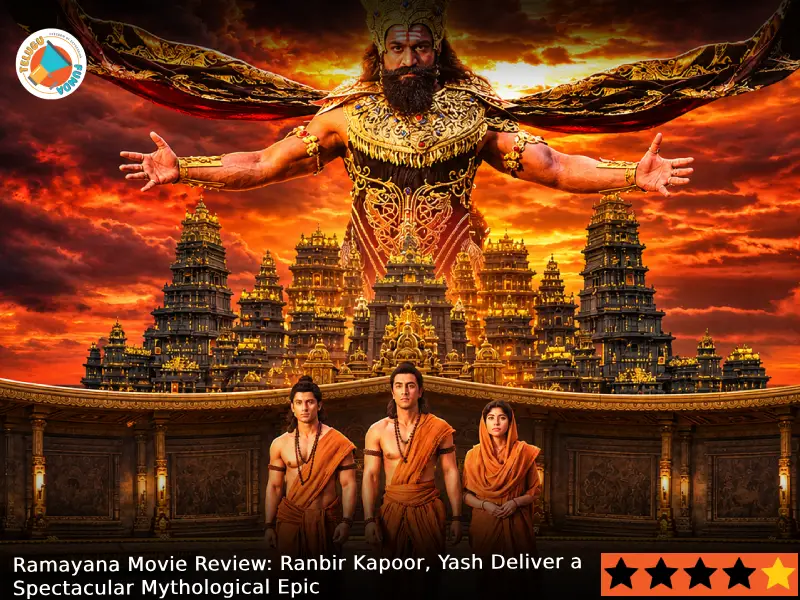
A breathtaking visual spectacle backed by powerful performances, grand action blocks, and emotionally rich storytelling.

Storyline

The much-awaited Indian epic Ramayana, featuring Ranbir Kapoor, Yash, and Sai Pallavi in lead roles, has finally arrived in theatres amid massive expectations. Directed by Nitesh Tiwari, the mythological action drama brings one of India’s most celebrated epics to the big screen on an unprecedented scale.

The film opens by exploring Ravana’s (Yash) childhood, his journey to acquire Lanka from Kubera, and his quest to obtain a powerful boon from Lord Brahma. After defeating Lord Indra (Kunal Kapoor), Ravana’s growing dominance prompts Indra to seek help from Lord Vishnu. This eventually leads to the birth of Lord Rama (Ranbir Kapoor), setting the stage for the legendary battle between good and evil.

Positives

Adapting an epic like Ramayana, which has been deeply rooted in Indian culture for centuries, is no easy task. It is a challenging subject that demands a perfect balance of devotion, storytelling, and cinematic grandeur. Nitesh Tiwari handles this responsibility impressively, delivering an adaptation that could become a reference point for future mythological films.

Producer Namit Malhotra deserves tremendous appreciation for backing a project of this magnitude without compromising on its vision. Bringing such a massive cinematic universe to life requires extraordinary ambition and courage, and the film reflects that commitment.

Ranbir Kapoor is the biggest strength of Ramayana. Despite the initial discussions surrounding his casting, the actor silences every doubt with a remarkable performance as Lord Rama. He brings grace and a divine presence to the character, while his action sequences and emotionally charged moments leave a lasting impression. He is undoubtedly the heartbeat of the film.

Yash makes a powerful impact as Ravana. His screen presence, attitude, ferocious expressions, and commanding performance elevate every sequence he appears in. The actor perfectly captures the arrogance and intimidating personality of the antagonist, making him one of the film’s biggest highlights.

Sai Pallavi is impressive as Sita, bringing remarkable serenity and grace to the character. Ravie Dubey delivers a convincing performance as Lakshman, with some entertaining moments. Rakul Preet Singh also makes an impact as Shurpanakha.

The film is packed with spectacular action sequences. The Indra-Ravana confrontation, Jatayu’s battle with Ravana, and the tornado sequence are among the major highlights. The placement of the song ‘Darthi Hai Ambar Hai’ adds to the theatrical experience.

Beyond its visual grandeur, Ramayana also scores heavily on the emotional front. The pre-Vanavaas portions and the sequences involving Jatayu’s suffering and death are particularly moving. Ravana’s backstory also adds an interesting dimension to the narrative.

Negatives

Despite being an impressive cinematic experience, Ramayana has a few shortcomings. The narrative loses some momentum in the post-interval portions, particularly during the sequence involving Ravana and Vidyutjihva. This portion could have been trimmed to maintain a better flow.

There are also minor sound-mixing issues in a couple of scenes, making certain dialogues difficult to hear clearly. Additionally, the background placement of ‘Jai Jai Ram’ creates an impact, but including the complete version of the song would have made the experience even better.

Technicalities

Ramayana is a massive technical achievement. The combination of A.R. Rahman and Hans Zimmer’s music elevates the film’s emotional and dramatic moments. The background score is particularly effective, while the songs complement the narrative.

The production design deserves special appreciation for creating a magnificent mythological world. Pankaj Kumar and Mahesh Limaye deliver impressive cinematography, capturing the grandeur of the locations and the intensity of the action sequences. Huzefa Lokhandwala’s editing is satisfactory, although a few portions could have been crisper.

DNEG’s visual effects are among the biggest attractions. The detailing of creatures, large-scale battle sequences, and spectacular visual compositions demonstrate the studio’s technical expertise. The 3D presentation further enhances the experience, making the film a treat to watch on the biggest possible screen.

However, the biggest credit goes to director Nitesh Tiwari. He successfully balances larger-than-life action moments with the emotional depth required for a story like Ramayana. Known for his strength in handling human emotions, the filmmaker delivers on that front while also presenting several whistle-worthy mass moments. Despite the enormous expectations surrounding the epic, Nitesh manages to deliver a compelling cinematic experience.

Rating

4/5

Final Verdict

Ramayana is a spectacular mythological epic that successfully combines cinematic grandeur with emotional depth. Nitesh Tiwari delivers an ambitious adaptation that impresses with its breathtaking visuals, powerful action sequences, and exceptional performances. Ranbir Kapoor shines as Lord Rama, Sai Pallavi brings grace to Sita, and Yash is terrific as Ravana. DNEG’s extraordinary VFX work sets a new benchmark for Indian cinema.

Although the film experiences a few pacing issues and minor sound-mixing glitches, they do little to diminish the overall experience. With its massive scale, memorable performances, and emotional storytelling, Ramayana delivers a satisfying theatrical experience. A must-watch on the biggest screen possible.

Follow Telugu Funda on trending Social Media Platforms for more Cinema, OTT, Political, And Sports updates.
Punchline:

Aadarsha Kutumbam is a decent family entertainer that blends comedy, action, and emotions. Venkatesh leads the show with his effortless performance, while the first half offers plenty of entertaining moments.

Storyline:

Chitti Babu Thotti (Venkatesh), his wife Swarna Thotti (Srinidhi Shetty), and their children struggle with financial problems and mounting debts. Their lives take an unexpected turn when they win a ₹100 crore lottery and move into a luxurious villa worth ₹20 crore. However, their newfound happiness soon attracts trouble when a Bihar-based dacoit gang targets the wealthy family. What happens when the gang enters their lives, and how does the family deal with the unexpected danger? The rest of the story unfolds around these developments.

Positives:

Venkatesh is the biggest strength of the film. Playing a middle-class family man with a comic touch and mass appeal comes naturally to him. He handles the comedy effortlessly and also impresses in the action sequences.

Srinidhi Shetty delivers a good performance and surprises with her comic timing. Trivikram’s writing gives her character some entertaining moments. The performances of child actors Raja Prajwal and Yuvina Parthavi are also impressive.

Satya provides several hilarious moments and adds to the film’s entertainment quotient. Raghu Babu, Rao Ramesh, and the supporting cast perform well within their respective roles.

The first half is neatly written, with a good balance of comedy and action. The interval sequence stands out as one of the major highlights. The twist in the second half also addresses the initial doubts surrounding the film’s storyline and its similarities to a recent blockbuster.

Thaman’s background score elevates several important sequences. The film’s attempt to blend family emotions with comedy and action also gives it a familiar Trivikram flavour.

Negatives:

Nivetha Pethuraj has very little scope to perform, which is disappointing considering her talent. Nara Rohith is just okay in his role, while a stronger performer could have added more impact. Udaybir Sandhu gets a decent character, but his performance could have been more effective.

The basic storyline is not particularly engaging, although the screenplay maintains a reasonable pace. More importantly, the emotional sequences fail to create the desired impact and feel somewhat artificial. A stronger emotional foundation could have helped audiences connect better with the characters.

The second half begins with an interesting twist but struggles to maintain the momentum established in the first half. A few portions feel uneven, and the overall impact is comparatively weaker. The songs also fail to make a lasting impression.

Technicalities:

Trivikram Srinivas delivers the film in his familiar style, combining situational comedy, action, and family elements. His trademark dialogue-writing and humour work in several portions. However, better handling of the emotional sequences could have made the film much more effective.

Navin Nooli’s editing is sharp in the first half but becomes slightly inconsistent in the second half. Thaman’s background score is a major asset, though the songs are underwhelming. The ‘Narayanamma’ song feels particularly unnecessary.

Kevin Kumar’s action choreography deserves appreciation, especially for the interval sequence. Ravi K Chandran’s cinematography is decent, and the production values are good.

Rating: 3.25/5

Final Verdict:

Aadarsha Kutumbam House No. 47 is a decent family entertainer that offers a satisfying dose of comedy and action. Venkatesh, Srinidhi Shetty, and Satya keep the proceedings entertaining, while the first half and interval sequence are major highlights. However, an underwhelming second half, weak emotional moments, and underutilised characters prevent the film from reaching its full potential. Despite these shortcomings, it makes for an enjoyable family watch.

Follow Telugu Funda on trending Social Media Platforms for more Cinema, OTT, Political, And Sports updates.

Punchline

A powerful real-life story that finds its footing in the final act but struggles with engaging storytelling in the first half.

Storyline

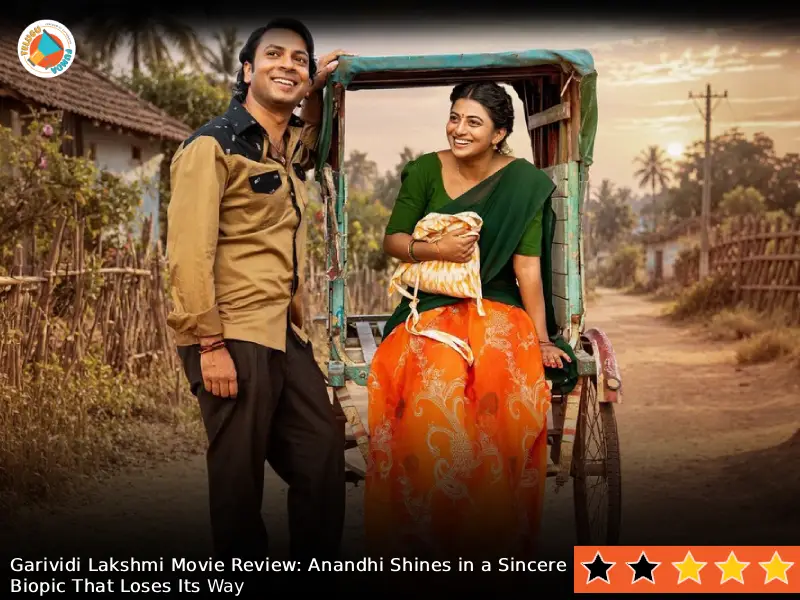
Garividi Lakshmi is a biographical drama produced by People Media Factory, based on the life of the legendary Uttarandhra folk singer and Burra Katha artist Garividi Lakshmi. Born in Garividi village in Srikakulam district, Lakshmi is a naturally gifted artist who can memorise songs and poetry simply by listening to them, despite being illiterate. The film chronicles her remarkable journey, highlighting her achievements, personal struggles, betrayals, and the circumstances that shaped her life.

Positives

Garividi Lakshmi’s inspiring real-life story.

Anandhi’s impressive performance in the lead role.

Emotionally effective pre-climax and climax.

Well-executed Burra Katha performances.

A sincere attempt to bring a lesser-known personality’s life to the big screen.

Negatives

A screenplay that follows a familiar Mahanati-style storytelling pattern.

An underwhelming and less engaging first half.

Burra Katha episodes and songs interrupt the narrative flow.

Inconsistent writing and narration.

Technicalities

Director Gowri Naidu Jammu deserves appreciation for choosing an unfamiliar yet inspiring subject. However, while some portions are written effectively, the screenplay lacks consistency. The initial portions establish the character reasonably well, but the narrative loses momentum as songs and Burra Katha performances take over. The second half is comparatively stronger, with the emotional conflict and final act delivering the film’s most impactful moments.

Anandhi carries the film with a convincing performance, portraying both Lakshmi’s achievements and her emotional struggles with sincerity. Rag Mayur performs well in a character with two contrasting shades, while Naresh delivers a dependable performance. Raasi is convincing as Lakshmi’s mother, and Ankith Koyya is adequate in his limited role.

Charan Arjun’s background score is satisfactory, with the emotional track in the climax standing out. A couple of songs work well, while the remaining tracks could have been more effective. Aditya Juvvadi’s cinematography captures the natural village settings adequately. Ravi Teja’s editing could have been sharper, particularly in the first half. People Media Factory’s production values are appropriate for the film.

Rating: 2/5

Final Verdict

Garividi Lakshmi is a sincere attempt to tell the story of a gifted folk artist whose achievements and struggles deserve wider recognition. Anandhi’s performance and the emotionally engaging final act work in the film’s favour. However, the lack of an engaging first half, uneven screenplay, and familiar storytelling approach prevent the biopic from reaching its full potential. Despite its shortcomings, the film and its makers deserve appreciation for bringing Garividi Lakshmi’s inspiring life story to the audience.

Follow Telugu Funda on trending Social Media Platforms for more Cinema, OTT, Political, And Sports updates.

Punchline

Crazy Kalyanam delivers a few good laughs in the first half but loses its grip with an overlong and emotionally overloaded second half.

Story

Keerthi (Anupama Parameswaran) is focused on building a secure future for herself and hopes to achieve it by landing a government job. Her father, Parvathaalu (Naresh), who is unhappy with the troubles created by his son-in-law Balraj (Tharun Bhascker), wants Keerthi to marry into a well-settled family. But his plans go awry when she falls in love with Uday (Akhil Raj), a handloom weaver. What happens when Keerthi’s dreams and her father’s expectations clash, and how their lives change because of her decision, forms the rest of the story.

Positives

Veteran actor Naresh Vijayakrishna is the biggest strength of Crazy Kalyanam. His impeccable comic timing brings several entertaining moments, while his performance in the emotional sequences is equally effective. The first half is handled reasonably well, with the comedy surrounding his attempts to find a suitable match for his daughter working in the film’s favour.

Tharun Bhascker also contributes to some enjoyable sequences, and his combination with the lead cast provides a few laughs. Anupama Parameswaran delivers a good performance as a determined young woman striving for independence. Akhil Raj and the supporting cast are adequate in their respective roles.

Negatives

The second half is the biggest drawback of Crazy Kalyanam. What begins as an entertaining family drama gradually becomes stretched, with too many emotional subplots competing for attention. The lengthy marriage episode consumes considerable screen time without creating the intended impact.

The emotional threads are not woven together effectively, making the narrative feel exhausting at times. Tharun Bhascker’s character undergoes a sudden transformation towards the climax, which feels unconvincing given his behaviour throughout the film. Similarly, Naresh’s emotional restraint following the plot twist lacks the necessary impact because of weak writing. Several scenes also feel overly melodramatic.

Technicalities

Suresh Bobbili’s music and background score are decent, while Shyam Dupati’s cinematography adds value to the proceedings. Shravan Katikaneni’s editing could have been sharper, particularly in the second half, where trimming unnecessary scenes would have improved the pace.

The production values are fair. Director Badrappa Gajula shows a reasonable understanding of family comedy in the first half, but the narrative loses direction in the latter portions. The excessive focus on multiple emotional tracks prevents the film from maintaining a consistent flow.

Rating: 2.75/5

Final Verdict

On the whole, Crazy Kalyanam is an okayish family drama that works in parts. Naresh’s entertaining performance, some effective comedy, and a decent first half keep the proceedings engaging initially. However, the dragged-out marriage episode, weakly connected emotional subplots, and an underwhelming second half prevent the film from reaching its full potential. It offers a few laughs but ultimately falls short of being a satisfying family entertainer.

Follow Telugu Funda on trending Social Media Platforms for more Cinema, OTT, Political, And Sports updates.
 

Punchline

Ranabaali has a compelling premise and an engaging first half, but predictable writing and an overlong second half prevent it from reaching its full potential.

Storyline:

Singanamala Bobbili Ranabaali (Vijay Deverakonda) is born with a purpose and eventually becomes a legend in a cursed land. Set against the backdrop of British rule in India, the film explores colonial atrocities, grain exports, and the devastating famine that affected the Madras Presidency between 1876 and 1878. As Sir Theodore Hector (Arnold Vosloo) advances his agenda, Ranabaali rises against the British to protect his people and homeland. What drives Ranabaali’s fight, and does he succeed in challenging the colonial administration? The rest of the story unfolds on screen.

Positives

Engaging first half

Sincere storytelling and an interesting historical backdrop

Excellent chemistry between Vijay Deverakonda and Rashmika Mandanna

Rashmika Mandanna’s impressive performance

Arnold Vosloo’s menacing screen presence

Well-executed pre-interval sequence

Impressive cave fight in the second half

Refreshing music and effective background score by Ajay-Atul

Negatives

Predictable narration

Repetitive sequences that revolve around a single point

Patchy visual effects in a few portions

Excessive runtime, particularly in the second half

Lack of emotional depth in crucial scenes

Underwhelming climax and an ineffective twist

Technicalities

Ajay-Atul’s music is one of the film’s major strengths. The duo delivers three good songs, while the background score enhances the impact of several important sequences. Endhayya Saami is soothing and looks beautiful on screen.

Karthika Srinivas’s editing is adequate in the first half, but the second half could have benefited from tighter cuts. Several repetitive portions slow down the narrative, making the film feel unnecessarily lengthy. Jishnu Bhattacharjee and Nirav Shah’s cinematography suits the period-action drama, with the cave fight standing out for its visual presentation. However, the visual effects, particularly during the Madras port episode, appear patchy. Mythri Movie Makers provides adequate production values within the film’s market limitations.

Rating: 2.75/5

Final Verdict

Ranabaali attempts to tell a lesser-explored chapter of Indian history through a period-action drama. Director Rahul Sankrityan deserves credit for his sincere approach and for delivering an engaging first half. Vijay Deverakonda and Rashmika Mandanna’s chemistry, Arnold Vosloo’s presence, and Ajay-Atul’s music add considerable value to the film.

Follow Telugu Funda on trending Social Media Platforms for more Cinema, OTT, Political, And Sports updates.
Punchline:

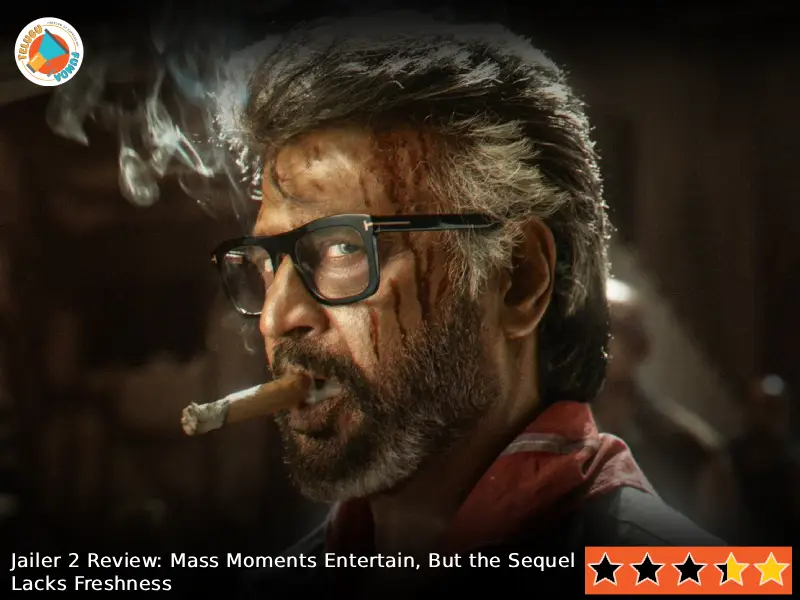
Rajinikanth’s trademark style and entertaining comedy make Jailer 2 a decent watch, but a thin storyline and a lengthy second half limit its impact.

Storyline:

In Jailer 2, Superstar Rajinikanth reprises his role as Tiger Muthuvel Pandian, taking the story forward from the 2023 hit. The death of Varma (Vinayakan) triggers a dangerous hunt, with several major smuggling gangs determined to identify and eliminate the person responsible. Muthuvel Pandian, who has been enjoying a quiet life, finds himself caught in the middle of this growing conflict. As he digs deeper into the criminal underworld, he sets out to expose the key players and confront the forces behind the operation.

Positives:

Rajinikanth remains the biggest strength of Jailer 2. His signature walk, stylish gestures, slow removal of his glasses, and commanding screen presence continue to entertain fans. He carries the character with ease, delivering the kind of mass moments audiences expect from him.

The first half offers a good dose of comedy, with Namo Narayana getting plenty of opportunities to entertain. His character’s overconfidence and deadpan exchanges with Rajinikanth work well, while Yogi Babu also contributes to the humour. These sequences provide some enjoyable moments in Nelson Dilipkumar’s familiar style.

S. J. Suryah performs well as the main antagonist, although the role does not offer anything particularly new for him. Vidya Balan makes an interesting impression as his on-screen sister, handling her negative character convincingly. Suraj Venjaramoodu is also effective in his role.

Anirudh Ravichander’s background score adds energy to several important sequences, especially the action blocks. The return of the original Jailer theme helps create the required atmosphere. The climax also offers a reasonable setup for the next chapter.

Negatives:

The biggest drawback of Jailer 2 is its weak storyline. The plot feels thin, with several sequences appearing to exist mainly to elevate Rajinikanth’s character. The narrative also follows a structure similar to the first instalment, making it difficult for the sequel to deliver enough freshness.

The pacing becomes another major issue, particularly in the second half. With a runtime of nearly three hours, the film feels unnecessarily stretched in places. The gaps between major sequences affect the flow, and a tighter edit could have made the overall experience more engaging.

The much-anticipated cameos are also underwhelming. Mohanlal appears only briefly, while Shiva Rajkumar gets limited scope despite having around ten minutes of screen time. Jackie Shroff has little to contribute, and Mithun Chakraborty is barely utilised.

Hrithik Roshan’s introductory sequence fails to create the expected impact. Namo Narayana’s comedy is one of the first half’s highlights, but his reduced presence in the second half also affects the film’s entertainment quotient.

Technicalities:

Director Nelson Dilipkumar relies heavily on Rajinikanth’s hero moments, comedy, and stylish action rather than developing a compelling narrative. While these elements work in parts, stronger writing and better pacing could have significantly improved the film.

Anirudh Ravichander’s background score is a major asset, particularly during the action sequences and elevation scenes. Vijay Kartik Kannan’s cinematography supports the film’s larger-than-life presentation, while R. Nirmal’s editing is adequate but could have been sharper to control the runtime.

The production values match the scale of the film, and the technical presentation maintains the expected commercial appeal.

Rating: 3.25/5

Final Verdict:

On the whole, Jailer 2 is a decent commercial entertainer that relies largely on Rajinikanth’s screen presence, signature style, and first-half comedy. S. J. Suryah, Vidya Balan, and the background score add value, but the thin storyline, lengthy runtime, stretched second half, and underwhelming cameos prevent the film from reaching its full potential. Fans of Rajinikanth’s mass moments may find enough to enjoy, but those expecting a stronger story and more impactful cameos may be disappointed.

Follow Telugu Funda on trending Social Media Platforms for more Cinema, OTT, Political, And Sports updates.
Punchline

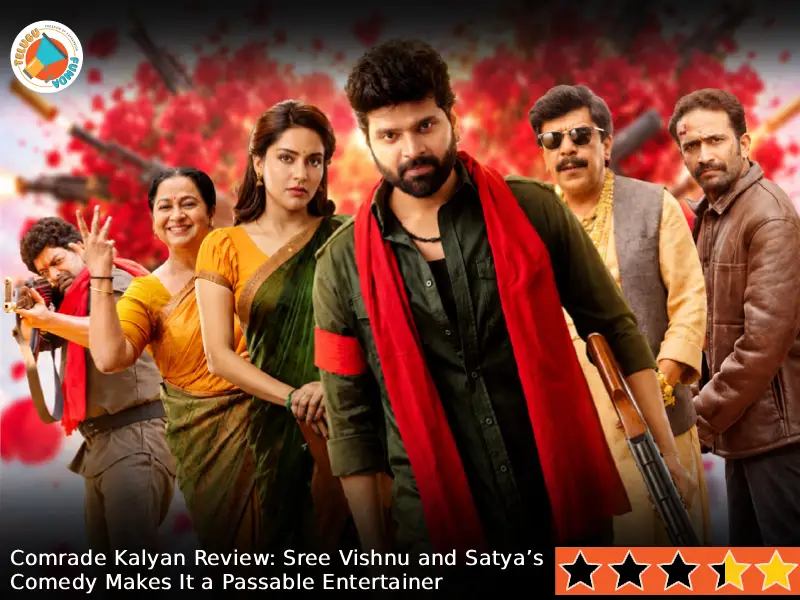
Sree Vishnu and Satya’s Fun Ride Offers Decent Entertainment Despite a Shaky Start

Storyline

Sree Vishnu is back with Comrade Kalyan, featuring Mahima Nambiar as the female lead. Directed by Janakiram Marella, the film blends comedy, romance, and a Naxalite backdrop. Here’s how it fares.

Kalyan (Sree Vishnu) manages a theatre in his village after taking it on lease from the village headman, with the help of his friend. His world changes when he falls for Sitara (Mahima Nambiar), an Odia girl who once helps him in a difficult situation. As Kalyan tries to impress her and win her affection, he unexpectedly gets drawn into the world of Naxalites. What begins as a love story soon turns into a dangerous journey, with the events that unfold forming the rest of the narrative.

Positives

The film prioritizes entertainment over serious political themes, making it an accessible comedy entertainer.
The lighter approach to Naxalism offers a different take compared to other Telugu films that have explored the subject.
The comedy sequences in both halves keep the proceedings engaging.
After a slow start, the film picks up pace with Mahima Nambiar’s entry, while Satya’s character adds to the entertainment.
Sree Vishnu delivers a sincere performance, and his comedy scenes with Satya emerge as one of the film’s biggest strengths.
Mahima Nambiar looks good and performs well in her role.
Sudarshan, Radhika, Upendra Limaye, and Shine Tom Chacko deliver decent performances.

Negatives

The film gets off to a dull start, with ineffective character introductions and a few scenes that feel out of place.
Some jokes fail to generate the intended laughs in the initial portions.
Dubbing issues affect a few scenes in the first half.
The momentum drops in certain portions after the interval.
The song celebrating the heroics of Sree Vishnu could have been presented better, especially given its placement in the narrative.
The climax lacks impact and needed a more convincing presentation.

Technicalities

Vijay Bulganin’s music and background score are decent but could have been more effective. Sai Sriram’s cinematography adds visual elegance, while the editing is satisfactory for the most part.

Writers Bhanu Bhogavarapu and Nandu Savarigana have not explored a completely new concept, but they manage to build an interesting conflict around the protagonist and blend it with comedy. The humour works better on screen than it does in the promotional material. Director Janakiram Marella delivers a fair execution, although the film could have benefited from a stronger opening and a more impactful climax.

Rating

3.25/5

Final Verdict

On the whole, Comrade Kalyan is a passable time-pass entertainer with a decent storyline and a generous dose of comedy. Sree Vishnu and Satya provide some enjoyable moments, helping the film overcome its slow beginning and occasional dips in momentum. While the climax fails to leave a lasting impression, the comedy keeps things moving for most of the runtime. If you are looking for a lighthearted entertainer, Comrade Kalyan makes for a reasonably enjoyable watch.

Follow Telugu Funda on trending Social Media Platforms for more Cinema, OTT, Political, And Sports updates.
Punchline

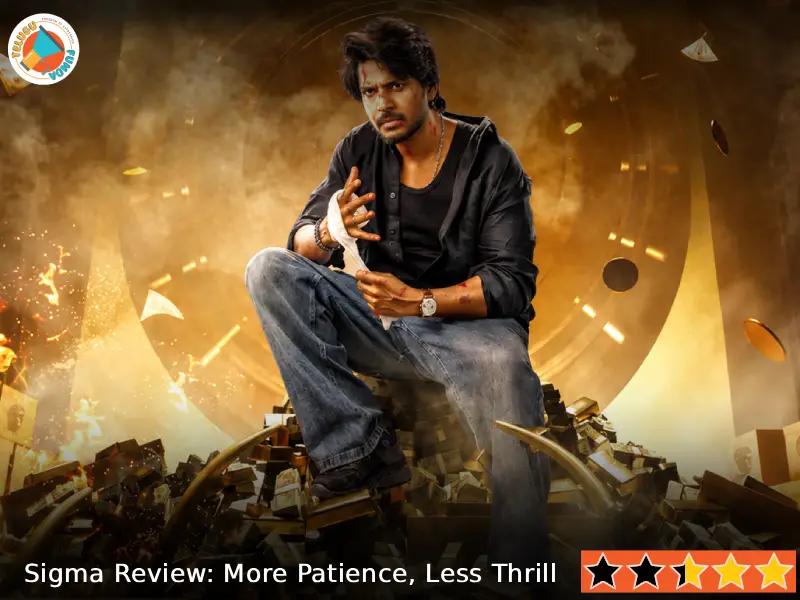
Sigma tries to deliver a stylish heist thriller with romance, comedy and action, but the weak writing and sluggish narration make it a tedious watch. Despite having enough material for an engaging thriller, the film struggles to create excitement.

Storyline

Guru (Sundeep Kishan) is financially struggling while running a library inherited from his mother. Alongside this, he operates a YouTube channel and is desperate to increase its following. He uses the voice of RJ Sam (Faria Abdullah), modifies it using AI and manages to boost his channel.

Sam confronts Guru after discovering what he has done, but their conflict eventually turns into attraction and love. Meanwhile, Veeraya Reddy (Sampath Raj) loses a key drive that provides access to a money vault. His lover Sarangi (Magalakshmi Sudarsanan) joins hands with his rival, while Guru somehow gets hold of the key.

The story then revolves around whether Guru will attempt to steal the money from the vault and whether Veeraya Reddy can stop him.

Positives

The basic heist premise has potential.
The vault and key setup creates some curiosity.
The cinematography is neat.
Production design is decent.
A few action portions work reasonably well.
The film has enough twists and characters to build an engaging thriller.

Negatives

Slow and dull narration.
The romantic track between Sundeep Kishan and Faria Abdullah lacks chemistry.
Several comedy portions unnecessarily drag the film.
Raju Sundaram’s doctor characterisation feels forced.
The supposed twist involving Sampath Raj fails to create much impact.
The heist portion takes too long to become engaging.
The climax feels absurd and underwhelming.
Telugu dubbing and dialogue translations are major weak points.
Some Telugu dialogues retain an obvious Tamil flavour.
Performances are mostly ordinary.
The 2-hour-25-minute runtime feels lengthy because of the sluggish screenplay.

Technicalities

Writing & Direction: Jason Sanjay opts for a familiar heist-thriller template but fails to give it the required pace and freshness. The film spends too much time on portions that do not contribute much to the central plot.

Performances: Sundeep Kishan delivers a functional performance but relies heavily on familiar expressions and mannerisms. Faria Abdullah is less convincing and appears uncomfortable with the material. Sampath Raj is adequate, while the supporting cast leaves limited impact.

Music & Background Score: Thaman’s background score is routine and does not add enough intensity to the major moments.

Cinematography: The visuals are neat and technically competent.

Production Design: The production design works well, particularly in establishing the world around the heist.

Dubbing & Dialogues: The Telugu dubbing is one of the film’s weakest aspects. Several translations feel unnatural, with some expressions sounding more like direct Tamil-to-Telugu conversions than natural Telugu dialogue.

Rating

2.25/5

Final Verdict

Sigma has the ingredients of a potentially engaging heist thriller, but weak writing, slow narration and underwhelming performances prevent it from delivering the required impact. There is plenty happening throughout the film, yet very little of it generates genuine excitement.

Punchline

Thella Kaagitham attempts to tackle a sensitive teenage issue with a socially relevant message, but the film struggles to translate its core idea into engaging drama. Despite a passable first half-hour and a confident debut from Bogapathi Nakshatra, the repetitive second half, excessive melodrama and stretched conflict make the film a tedious watch.

Storyline

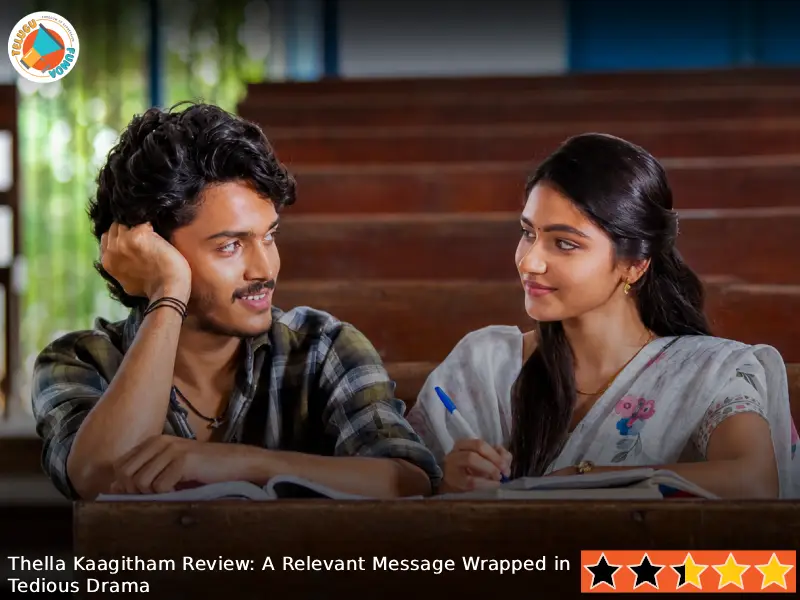
The film revolves around a teenage boy (Harsh Roshan) and a teenage girl (Bogapathi Nakshatra) who fall in love during their eleventh grade and eventually get intimate. Their lives take an unexpected turn when they are forced to deal with the consequences of their decision.

The story follows their attempts to handle the situation, the fear of informing their parents and the problems that arise as they search for a way out. The film ultimately focuses on the importance of teenagers approaching their parents when they find themselves in difficult situations.

Positives

Passable first 30 minutes
Bogapathi Nakshatra’s confident debut
Ajay’s performance, particularly in the climax
A socially relevant core message
A few good locations captured by the cinematography

Negatives

Tedious second half
Excessive melodrama
Repetitive sequences
Poor music and background score
Conflict point is stretched far beyond what the story can sustain
Comedy does not land consistently
Several characters are underutilised

Technicalities

Vijay Bulganin, who has delivered memorable music for romantic films in the past, disappoints here. None of the songs leave a lasting impression, while the background score also fails to elevate the emotional moments.

Nandu Savarigana’s writing is ordinary, with only a couple of dialogues standing out. The screenplay becomes increasingly repetitive once the central conflict is introduced, making the second half particularly difficult to sit through.

K. V. Guhan’s cinematography is functional and suits the film’s setting. Some of the lush green locations are captured well. Karrhika Srinivas’ editing, however, is a major drawback, especially in the second half, where the film desperately needed tighter pacing.

Director Ramesh Bandreddy deserves credit for attempting to address an important issue involving teenagers and the need for better communication between children and parents. However, the film’s execution falls short. Instead of allowing the message to emerge naturally through the story, the director relies on a voice-over towards the end to explicitly state the intended takeaway.

The film’s initial portions establish the teenage romance reasonably well, but once the main conflict arrives, the narrative gets stuck. The couple repeatedly tries to solve the problem, while the story takes too long to move forward. The lack of strong emotional involvement makes it difficult for the audience to empathise with their situation.

Telugu cinema has explored teenage romance before, with films such as Kotha Bangaru Lokam successfully balancing innocent romance, comedy, music and emotion. Thella Kaagitham deals with a somewhat similar underlying issue, but fails to achieve the same balance. The repeated situations, forced comedy and excessive melodrama ultimately weaken the film.

Harsh Roshan, who was impressive in Court: State vs a Nobody, appears noticeably restrained here. While he has a few decent moments, his overall performance lacks the natural ease seen in his previous film. Bogapathi Nakshatra, on the other hand, makes a confident debut. She looks good, performs well and has a noticeable screen presence.

Ajay delivers a solid performance as a strict but caring father, with his work in the climax being particularly effective. Saranya and Raj Kumar Kasireddy are adequate in their supporting roles, while Deepak Mali manages to generate a few laughs. Goparaju Ramana’s character, however, is underwritten and leaves little impact.

Rating

2.25/5

Final Verdict

Thella Kaagitham starts with a reasonably interesting setup but loses its way once the main conflict begins. The socially relevant message is worthy, but the stretched screenplay, repetitive sequences, weak music and excessive melodrama turn the film into a tedious experience.

Follow Telugu Funda on trending Social Media Platforms for more Cinema, OTT, Political, And Sports updates.

Recent Posts

Categories