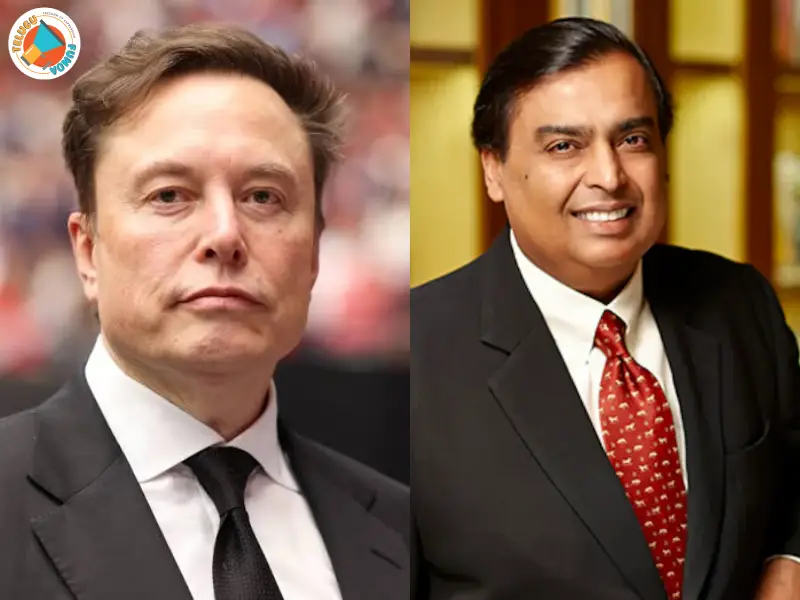
Elon Musk has triggered a fresh political and business controversy with his latest post on X, questioning whether Reliance Industries chairman Mukesh Ambani is the real power behind decisions in India. The post comes amid the ongoing debate over Starlink’s entry into the Indian market, with Musk seemingly stepping up pressure on the Indian government to grant his satellite internet company the necessary approvals.
For years, opposition parties have accused the Narendra Modi government of favouring corporate giants such as Mukesh Ambani and Gautam Adani. Now, Musk’s latest remarks have brought a similar argument into the spotlight, adding a new dimension to the Starlink licensing debate.
Over the past two days, Musk has reportedly used X to raise concerns about the delays in obtaining permission for Starlink’s services in India. He has alleged that certain business interests are attempting to block the company to protect their market positions. His comments have drawn a response from the government, and his subsequent reference to Ambani has further intensified the controversy.
However, the regulatory situation appears to be more complicated than Musk’s posts suggest. While Starlink has secured licences to operate in more than 165 countries and territories, its entry into India remains subject to regulatory and security requirements. The company’s claim that it has been complying with Indian rules for years does not automatically guarantee approval, particularly when national security clearances are involved.
Moreover, Starlink is not the only satellite internet operator awaiting the completion of regulatory procedures. Other companies operating in the Indian satellite communications sector have also been navigating similar approval processes.
Bharti Airtel chairman Sunil Mittal has reportedly stated that the company is awaiting regulatory approvals for its satellite internet venture, OneWeb. Reliance Jio’s satellite communications operations have also faced pending security and spectrum-related clearances. These developments complicate the argument that Starlink alone is being deliberately held back to protect Reliance’s business interests.
The key question, therefore, is whether Musk is highlighting a genuine regulatory concern or using public pressure to accelerate Starlink’s entry into one of the world’s largest telecommunications markets. His reference to Ambani has certainly made the debate more politically charged, but the pending approvals affecting other operators suggest that the issue cannot be viewed solely through the lens of a rivalry between Musk and Reliance.
Another major talking point is Musk’s suggestion that Starlink could help make high-speed internet more accessible in India. Although the company operates across numerous international markets, its pricing varies significantly from country to country. Satellite internet services can involve substantial subscription and equipment costs, making them more expensive than conventional broadband or mobile data plans in many markets.
Uganda has been cited as one of Starlink’s lower-priced markets, but even those tariffs may be considerably higher than the plans offered by Indian telecom operators such as Jio and Airtel. Consequently, Starlink’s arrival in India would not necessarily translate into cheaper internet for the average consumer.
The bigger challenge for Musk is to demonstrate that Starlink can offer a compelling combination of affordability, coverage and high-speed connectivity in India. Meanwhile, his latest post has turned a regulatory dispute into a broader debate over corporate influence, competition and the future of satellite internet in the country.
Whether Starlink receives the required approvals remains to be seen. For now, Musk’s Ambani remark has raised the political temperature, while the questions surrounding licensing, security clearances and pricing remain central to the company’s Indian ambitions.
Follow Telugu Funda on trending Social Media Platforms for more Cinema, OTT, Political, And Sports updates.