Telugu Funda

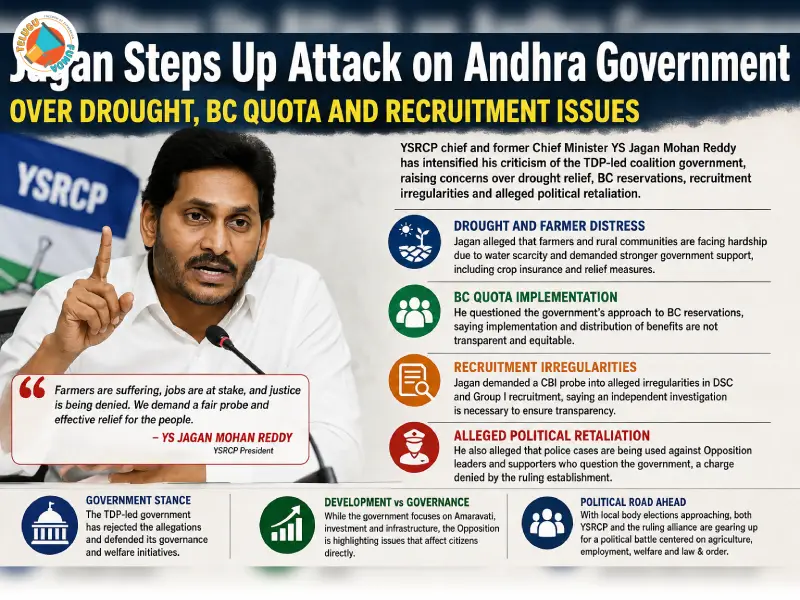
Amaravati: YSR Congress Party (YSRCP) president and former Andhra Pradesh Chief Minister YS Jagan Mohan Reddy has intensified his criticism of the TDP-led coalition government, raising concerns over drought relief, Backward Classes (BC) reservations, recruitment procedures and alleged political retaliation against Opposition supporters.

Jagan has recently targeted the government over the drought situation in parts of Andhra Pradesh, stating that farmers and rural communities need stronger support. The YSRCP has called for effective measures to address water shortages, crop-related concerns, insurance support and relief for affected farming communities.

The government, however, has maintained that it is taking necessary steps to address agricultural and welfare-related challenges. The dispute has largely centred on the adequacy and implementation of relief measures, with both sides presenting contrasting political narratives.

BC Reservation Becomes Key Political Issue

The implementation of BC quota-related measures has also emerged as a major point of contention. Jagan has questioned aspects of the government’s approach, while the ruling coalition has sought to project itself as committed to strengthening BC representation.

With Backward Classes forming a significant section of Andhra Pradesh’s electorate, reservation and representation issues carry considerable political importance. The implementation and distribution of benefits are therefore likely to remain under close scrutiny.

YSRCP Raises Questions Over Recruitment

Public recruitment is another major issue being highlighted by the Opposition. Jagan has demanded a CBI investigation into alleged irregularities in DSC and Group I recruitment, arguing that an independent probe is needed to establish whether any wrongdoing took place.

The issue has attracted attention among job aspirants and unemployed youth across the state. Teacher recruitment, in particular, remains politically sensitive because of the large number of candidates involved and its impact on government education.

The YSRCP has sought to use the recruitment controversy to question the government’s handling of selection procedures, while the ruling establishment has rejected the Opposition’s political allegations and defended its governance record.

Political Tensions Continue

Jagan has also alleged that police cases are being used against Opposition leaders and supporters who criticise the government. The ruling side has disputed these allegations, adding to the wider political confrontation between the TDP-led coalition and YSRCP.

The TDP coalition came to power following the 2024 Assembly elections, while the YSRCP was reduced to a much smaller presence in the state Assembly. Since then, the Opposition has been attempting to rebuild its organisational strength and regain political momentum by focusing on issues affecting citizens directly.

Drought and Employment Likely to Remain Key Issues

Agriculture remains a crucial political issue in Andhra Pradesh, given the state’s large rural population and dependence on irrigation and seasonal rainfall. Prolonged water shortages can have a direct impact on crop production, household incomes and rural employment.

Similarly, government recruitment is expected to remain a major concern among young people. Protests, recruitment disputes and demands for transparency could continue to put pressure on the government.

At the same time, the coalition government is highlighting its development agenda, including Amaravati, infrastructure expansion, industrial investment and long-term economic growth plans.

This has created two contrasting political narratives in the state: the government’s emphasis on development and future investment, and the Opposition’s focus on immediate governance, employment, agriculture and welfare concerns.

The political debate is expected to intensify as Andhra Pradesh moves towards local body elections. While the YSRCP will seek to strengthen its grassroots network, the ruling alliance will look to consolidate the political advantage gained in the 2024 Assembly elections.

Issues including agriculture, employment, BC reservations, welfare delivery and law and order are likely to remain central to the political contest in the months ahead.

Follow Telugu Funda on trending Social Media Platforms for more Cinema, OTT, Political, And Sports updates.
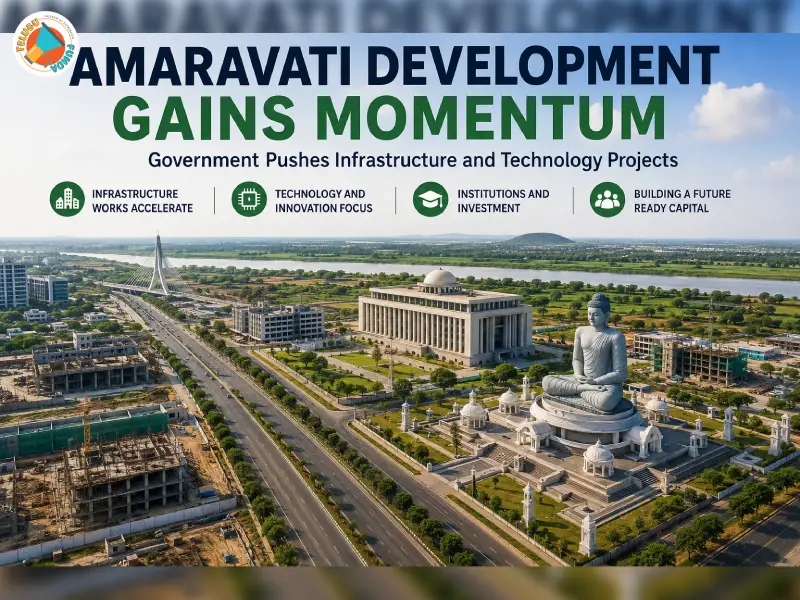
Amaravati: Development activity in Amaravati is gathering pace as the Andhra Pradesh government steps up infrastructure works and seeks to establish the capital region as a major economic, educational and technology hub.

Chief Minister N Chandrababu Naidu has directed officials to accelerate efforts to develop Amaravati as a key economic growth centre for the state. At a recent AP Capital Region Development Authority (APCRDA) meeting, officials reviewed ongoing works and plans for the development of the capital city.

The government’s current strategy covers infrastructure construction, urban planning, public services, technology projects and measures to attract institutions and private investment.

Infrastructure Works Gain Momentum

The APCRDA has been issuing tenders for infrastructure-related works across several villages in the Amaravati capital city area. Recent tenders have covered locations including Nidamarru, Neerukonda, Bethapudi, Kuragallu, Venkatapalem, Undavalli, Nekkallu and Thulluru.

These projects form part of the broader effort to establish the basic infrastructure required for the planned capital, including roads, utilities and other essential urban facilities.

The authority has also been pursuing projects related to urban services, energy infrastructure and quality-assurance mechanisms for construction and development works.

Technology Push Takes Centre Stage

Alongside physical infrastructure, the government is seeking to give Amaravati a stronger technology and innovation identity.

One of the major proposals is the establishment of a National Institute of Electronics and Information Technology (NIELIT) campus, involving an investment of around Rs 730.7 crore. The institution is expected to contribute to the emerging technology ecosystem, with areas such as artificial intelligence and quantum technologies receiving particular attention.

The government has indicated that Amaravati should not be developed merely as an administrative capital but should also emerge as a centre for deep technology, innovation, education and research.

Such an ecosystem could help attract universities, research institutions, startups and technology companies while creating opportunities for skilled employment.

Land and Compensation Remain Key Issues

Land continues to be one of the most sensitive aspects of Amaravati’s development. Thousands of farmers and landowners are connected to the capital region project, making land management and compensation important components of the government’s plans.

A recent decision to fix a rate of Rs 10.25 crore per acre for additional land in Amaravati is expected to have implications for future land acquisition and negotiations with landowners.

The government will need to balance infrastructure requirements with the interests of landowners as construction activity expands.

Focus on Global Expertise and Urban Design

The government is also looking to international expertise for Amaravati’s urban development. Recent developments indicate cooperation involving UK expertise in urban development-related areas.

At the same time, the government has spoken about creating a distinct identity for Amaravati through architecture and urban design that reflects Telugu culture while incorporating modern urban-planning principles.

From Capital Project to Economic Ecosystem

Amaravati’s development has been under discussion for more than a decade and has gone through significant political and policy changes. The present government has reaffirmed Amaravati as Andhra Pradesh’s capital and is seeking to accelerate the project.

However, transforming the region into a fully functional capital will require substantial investment in transport, water supply, drainage, power, housing, public services and commercial infrastructure.

Amaravati’s location between Vijayawada and Guntur provides an existing urban and transportation network that could support the expansion of the capital region.

Political Debate Continues

For the ruling coalition, Amaravati represents both a major governance initiative and a political commitment. The Opposition, meanwhile, continues to raise questions regarding the cost, pace and implementation of the capital project.

Despite the political debate, the increase in tenders, infrastructure activity and institutional proposals indicates movement from long-term planning towards implementation in several areas.

The next phase will be crucial, with the government expected to focus on completing infrastructure packages, attracting private investment and bringing educational and technology institutions to the region.

If these plans are implemented effectively, Amaravati could gradually evolve beyond an administrative capital into a broader economic, educational and technology centre for Andhra Pradesh.

For now, the government’s priority remains clear: build the physical infrastructure, establish key institutions and create the foundations for a long-term economic ecosystem in Amaravati.

Follow Telugu Funda on trending Social Media Platforms for more Cinema, OTT, Political, And Sports updates.
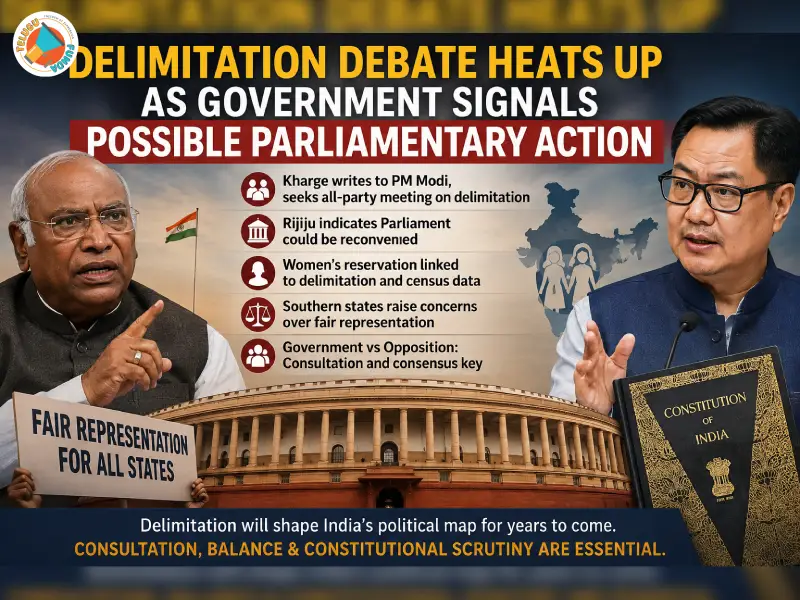
New Delhi: The political debate over delimitation and women’s reservation has intensified, with the government indicating that Parliament could potentially be reconvened to take up issues linked to proposed constitutional changes. The Opposition, meanwhile, is seeking wider consultations before any major move is made.

Congress president and Leader of Opposition in the Rajya Sabha Mallikarjun Kharge has written to Prime Minister Narendra Modi calling for an all-party meeting to discuss the proposed constitutional amendment concerning delimitation. His appeal comes after Parliamentary Affairs Minister Kiren Rijiju indicated that Parliament could be reconvened if required.

What Is Delimitation?

Delimitation is the process of redrawing electoral constituency boundaries based primarily on population and constitutional provisions. Any major redistribution of Lok Sabha constituencies could have a significant impact on the political representation of different states.

The issue has gained renewed importance because of its connection with the implementation of the Women’s Reservation Act, which provides for reservation of seats for women in the Lok Sabha and state legislative assemblies.

The implementation of the women’s reservation framework is linked to delimitation and the publication of relevant population figures, making the timing and methodology of the exercise politically significant.

Southern States Raise Representation Concerns

One of the biggest concerns surrounding delimitation is its potential impact on the federal balance.

Population growth has varied considerably across Indian states. Southern states have historically expressed concerns that states which successfully implemented population-control measures could see their relative representation reduced if Lok Sabha seats are redistributed primarily on the basis of current population.

Meanwhile, states with higher population growth could potentially receive a larger share of parliamentary representation.

This has turned delimitation into more than a question of redrawing constituency boundaries. It is also closely linked to the distribution of political power between states.

Women’s Reservation Adds Another Dimension

The implementation of women’s reservation has added another important element to the debate.

Political parties broadly support increasing women’s representation in legislatures, but differences remain over the timing, methodology and manner in which the reserved seats will be distributed.

Supporters of faster implementation argue that greater representation of women is an important democratic reform. Critics and Opposition parties, however, have called for greater clarity on the broader implications of the delimitation process.

Government and Opposition Face Key Challenges

For the government, the challenge will be to balance its objective of implementing women’s reservation with concerns raised by states and political parties over representation.

For the Opposition, the focus is on ensuring that any constitutional changes receive adequate parliamentary scrutiny and that the federal balance is protected.

An all-party meeting could provide an opportunity for political parties to present their views and seek greater clarity before any constitutional amendment or related legislation is introduced.

What Happens Next?

The immediate question is whether Parliament will actually be reconvened and, if so, what specific legislative proposals will be brought before the Houses.

Another key question is whether the government and Opposition can reach broad political agreement on the principles governing delimitation and women’s reservation.

States are also expected to closely monitor developments, as any redistribution of parliamentary seats could directly affect their political influence at the national level.

With delimitation potentially shaping India’s electoral map for years to come, the issue is likely to remain one of the most significant constitutional and political debates in the country.

For now, there is broad recognition of the importance of women’s representation, but differences remain over how and when the process should be implemented and how the interests of different states can be balanced.

Follow Telugu Funda on trending Social Media Platforms for more Cinema, OTT, Political, And Sports updates.
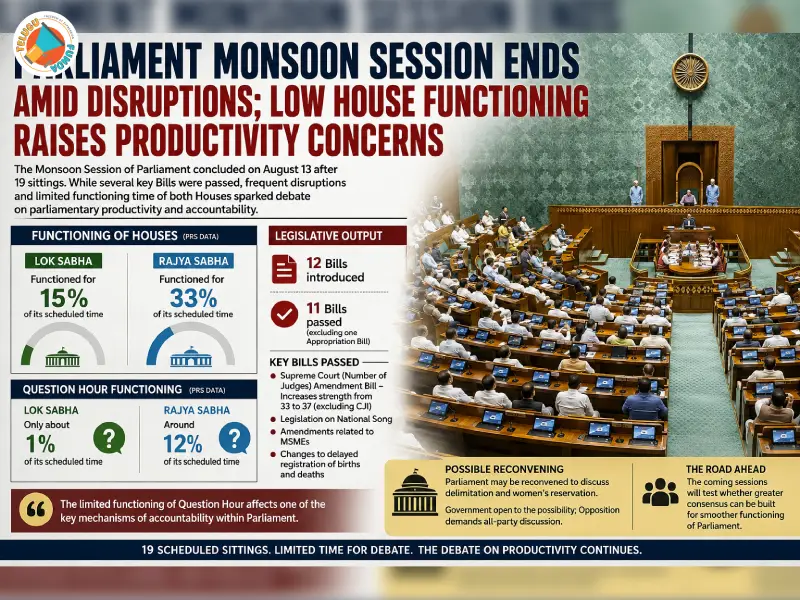
New Delhi: The Monsoon Session of Parliament concluded on August 13 after 19 sittings, with repeated disruptions and limited functioning of both Houses becoming major talking points. While the government succeeded in pushing several key Bills through Parliament, the low working hours raised concerns over legislative productivity and parliamentary scrutiny.

The session was held from July 20 to August 13, with both the Lok Sabha and Rajya Sabha scheduled to meet for 19 days. According to data compiled by PRS Legislative Research, the Lok Sabha functioned for around 15% of its scheduled time, while the Rajya Sabha recorded approximately 33% functioning.

The figures have once again brought the issue of parliamentary productivity into focus, particularly amid frequent adjournments and political disagreements between the government and Opposition.

Question Hour Sees Major Disruptions

One of the most significant concerns was the limited functioning of Question Hour, an important mechanism through which MPs hold the government accountable.

PRS data shows that Question Hour functioned for only about 1% of its scheduled time in the Lok Sabha and around 12% in the Rajya Sabha during the session. Repeated disruptions and adjournments affected the opportunity for MPs to raise questions directly with ministers on government policies and implementation.

Government Pushes Ahead With Legislative Agenda

Despite the disruptions, Parliament passed several pieces of legislation during the session. PRS recorded 12 Bills being introduced and 11 Bills being passed, excluding one Appropriation Bill.

The legislative agenda covered areas including taxation, business regulation, judicial strength, registration of births and deaths, and other policy matters.

Among the key legislation passed was the Supreme Court (Number of Judges) Amendment Bill, which increases the sanctioned strength of Supreme Court judges, excluding the Chief Justice of India, from 33 to 37.

Parliament also passed legislation concerning the national song and amendments related to micro, small and medium enterprises. Changes were also made to provisions dealing with delayed registration of births and deaths.

Government and Opposition Remain Divided

The session witnessed sharp differences between the government and Opposition over several issues. Opposition parties sought discussions on matters they considered important, while the government continued with its listed legislative programme.

The government maintained that it was able to advance its legislative agenda despite the disruptions. Opposition parties, meanwhile, argued that important national issues deserved adequate parliamentary discussion and scrutiny.

The developments have once again highlighted the challenge of balancing the government’s responsibility to pass legislation with the Opposition’s role in questioning policies and examining proposed laws.

Delimitation and Women’s Reservation May Bring Parliament Back

Another major issue emerging after the session is the possibility of Parliament being reconvened to discuss matters linked to delimitation and women’s reservation.

Parliamentary Affairs Minister Kiren Rijiju has indicated that Parliament could potentially be reconvened for discussions on the matter. Congress president Mallikarjun Kharge has also called for an all-party discussion, putting the issue at the centre of the political conversation.

What the Session Means for Parliamentary Functioning

Parliamentary disruptions are not new, but the sharply reduced functioning time during the 2026 Monsoon Session has renewed questions about the effectiveness of legislative proceedings.

The importance of parliamentary productivity extends beyond the number of Bills passed. Parliamentary debate allows lawmakers to examine legislation, raise concerns, seek clarifications and scrutinise government decisions.

The session has therefore produced two contrasting narratives. On one side, the government managed to pass several Bills and maintain its legislative agenda. On the other, the limited functioning of both Houses reduced the time available for detailed debate and Question Hour.

As Parliament prepares for its upcoming sessions, the focus is likely to remain on whether the government and Opposition can reach greater agreement on the conduct of parliamentary business.

For now, the 2026 Monsoon Session stands out for the striking gap between the 19 scheduled sittings and the relatively limited time during which the two Houses functioned effectively.

Follow Telugu Funda on trending Social Media Platforms for more Cinema, OTT, Political, And Sports updates.

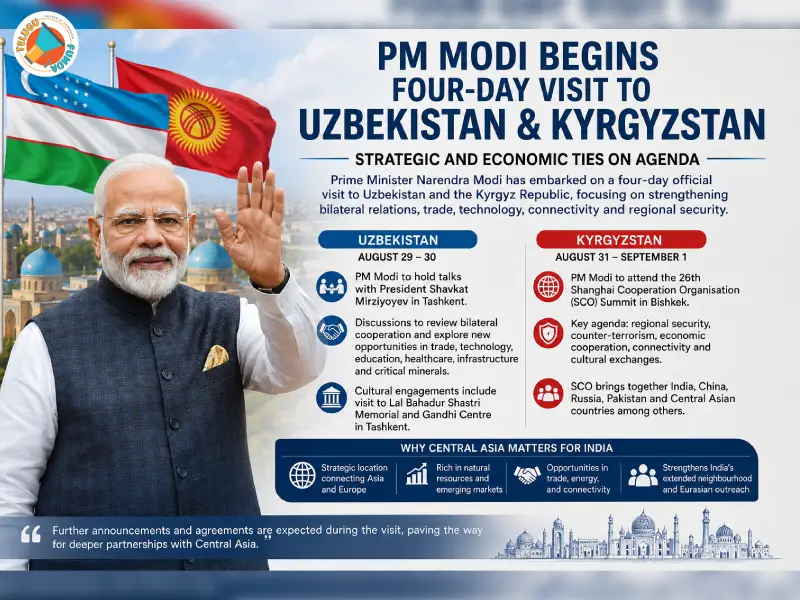
Prime Minister Narendra Modi has begun his four-day official visit to Uzbekistan and the Kyrgyz Republic, with bilateral relations, trade, technology, connectivity and regional security expected to feature prominently in his engagements.

According to the Prime Minister’s Office, Modi will be in Uzbekistan from August 29 to 30 before travelling to Kyrgyzstan from August 31 to September 1 to attend the 26th Shanghai Cooperation Organisation (SCO) Summit.

Modi Holds Talks With Uzbekistan President

The first leg of the visit takes Modi to Tashkent, where he is scheduled to meet Uzbek President Shavkat Mirziyoyev. The two leaders are expected to review the progress of bilateral cooperation and discuss new opportunities to strengthen economic and institutional ties.

India and Uzbekistan have maintained close diplomatic relations since the establishment of ties following the dissolution of the Soviet Union. Cooperation between the two countries has gradually expanded into sectors including pharmaceuticals, healthcare, education, information technology, infrastructure and trade.

Critical minerals and emerging technologies are also gaining importance in India’s engagement with Central Asia. The region holds strategic significance due to its natural resources, geographical position and links between major Asian and European markets.

Education remains another key area of India-Uzbekistan relations, with thousands of Indian students pursuing studies in Central Asian countries, particularly in the medical sector.

Cultural Engagements in Tashkent

Modi’s Uzbekistan itinerary also includes engagements highlighting the historical and cultural links between the two nations. He is scheduled to visit places associated with India’s legacy in Uzbekistan, including the Lal Bahadur Shastri Memorial and the Gandhi Centre in Tashkent.

Modi to Attend SCO Summit in Kyrgyzstan

After completing his Uzbekistan visit, Modi will travel to Bishkek in Kyrgyzstan to participate in the 26th SCO Summit.

The SCO brings together India, China, Russia, Pakistan and several Central Asian nations, making it an important platform for discussions on regional security, economic cooperation and connectivity.

Regional security, terrorism, economic partnerships and developments across Central Asia and the wider Eurasian region are expected to be among the key issues discussed at the summit.

Central Asia Gains Strategic Importance for India

The geopolitical importance of Central Asia has increased amid changing global partnerships, energy security concerns and the development of new transport corridors.

For India, the region is particularly significant because of its proximity to Afghanistan and its role in New Delhi’s broader Eurasian strategy. India has been exploring ways to improve connectivity with Central Asian markets despite geographical challenges, including routes through Iran and other regional partners.

Closer engagement with Uzbekistan could create opportunities for Indian businesses in pharmaceuticals, IT, healthcare, education and infrastructure. At the same time, stronger economic ties could help India expand its commercial presence across Central Asian markets.

Kyrgyzstan is also an important partner for India in the region, with defence and security cooperation, education and cultural exchanges forming key areas of bilateral engagement.

What to Expect From Modi’s Visit

The four-day visit combines bilateral diplomacy with multilateral engagement. While the Uzbekistan leg is focused on strengthening India-Uzbekistan ties, the Kyrgyzstan visit will place India within the wider SCO framework.

The visit is being closely watched for possible announcements or agreements involving trade, investment, education, technology and strategic cooperation.

For New Delhi, the broader objective is to translate growing diplomatic engagement with Central Asia into stronger economic, technological and strategic partnerships.

With Modi’s programme continuing until September 1, further developments are expected during his bilateral meetings and the SCO Summit.

Follow Telugu Funda on trending Social Media Platforms for more Cinema, OTT, Political, And Sports updates.
Kiran Abbavaram is set to take a major leap beyond Telugu cinema with his upcoming project Indraputra, also known as KA15. Following the decent success of Chennai Love Story, the actor is now gearing up for a much bigger and ambitious outing aimed at a pan-India audience.

Touted as a pan-India mythological action-fantasy, Indraputra was officially announced by the makers. The film is being produced by Zee Studios and Prerna Arora, while debutant filmmaker Srikanth Puppala is making his directorial debut with the project.

The film is envisioned as the first chapter of an expansive mythological universe, making it an ambitious franchise starter. Inspired by Indian mythology, the story is said to explore the eternal battle between dharma and adharma, promising a blend of fantasy, action and mythology.

Currently in the pre-production stage, Indraputra is expected to begin its regular shooting in October. The makers are planning a worldwide theatrical release next year, with the pan-India scale suggesting a wider release across multiple languages.

With an ambitious mythological world, a fresh director and Kiran Abbavaram stepping into a larger canvas, Indraputra could mark an important new phase in the actor’s career.

Follow Telugu Funda on trending Social Media Platforms for more Cinema, OTT, Political, And Sports updates.

Superstar Mahesh Babu’s 51st birthday celebrations brought plenty of excitement for fans, with special wishes and updates from across the film industry. The makers of Varanasi also unveiled exclusive new stills featuring the actor, but a special birthday tribute from filmmaker Sandeep Reddy Vanga quickly became one of the biggest talking points.

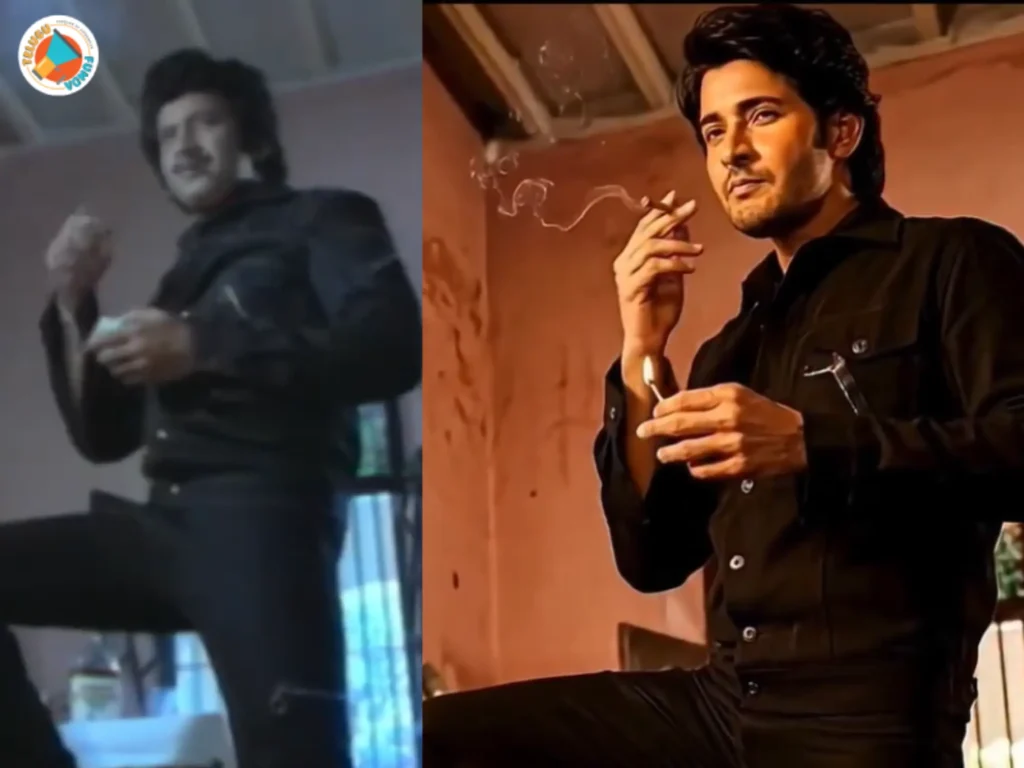
Vanga shared an AI-created video featuring Mahesh Babu and recreated the iconic dialogue of legendary actor Krishna garu from Kirayi Kotigadu. The creative tribute received a strong response from fans and instantly grabbed attention on social media.

More importantly, the video has reignited curiosity around the much-awaited collaboration between Sandeep Reddy Vanga and Mahesh Babu. The filmmaker is reportedly planning a project with the superstar, which has been widely speculated to be titled Devil.

Although there has been no official announcement regarding the project yet, the latest birthday tribute has once again fueled discussions among fans. Expectations are particularly high given Vanga’s track record of delivering intense and unconventional characters.

As per reports, the Mahesh Babu–Sandeep Reddy Vanga project could take shape after Mahesh completes his work on Varanasi and Vanga wraps up Spirit. Reports also suggest that producer Asian Suneil Narang may potentially back the much-awaited project.

For now, fans will have to wait for an official announcement. However, Sandeep Reddy Vanga’s special AI tribute has certainly added fresh momentum to the buzz surrounding his potential collaboration with Mahesh Babu.

Follow Telugu Funda on trending Social Media Platforms for more Cinema, OTT, Political, And Sports updates.
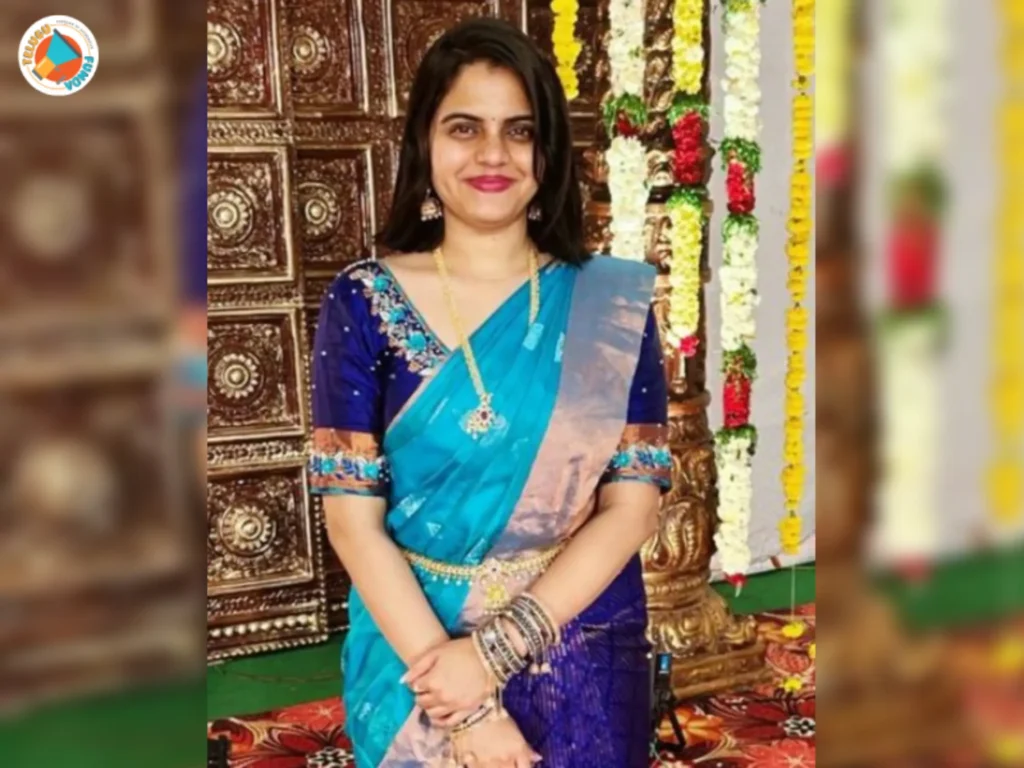
Actress Tabu is all set to make a powerful impression with her role in Puri Jagannadh’s upcoming multilingual film SlumDog: 33 Temple Road, which stars Vijay Sethupathi in the lead. The makers have now unveiled a glimpse of Tabu’s character, generating curiosity around her role in the film.

Tabu plays Gauri Hegde, a Deputy Commissioner of Income Tax, who is portrayed as a fearless, fierce and ruthless officer. The glimpse presents her in an intense action-packed avatar, showcasing a completely different side of the acclaimed actress.

Adding to the excitement, Tabu has reportedly dubbed her own dialogues in Telugu for the film. Her commanding screen presence and intense performance in the character glimpse have already raised expectations for her role.

Produced by Puri Jagannadh, Charmme Kaur and JB Narayan Rao Kondrolla, SlumDog: 33 Temple Road also features Samyuktha, Duniya Vijay, Brahmaji and VTV Ganesh in key roles. Harshavardhan Rameshwar is composing the music for the film.

With Tabu’s fierce character adding another layer to the story, it remains to be seen what role Gauri Hegde plays in Vijay Sethupathi’s world. The makers are yet to announce the release date of SlumDog: 33 Temple Road.

Follow Telugu Funda on trending Social Media Platforms for more Cinema, OTT, Political, And Sports updates.
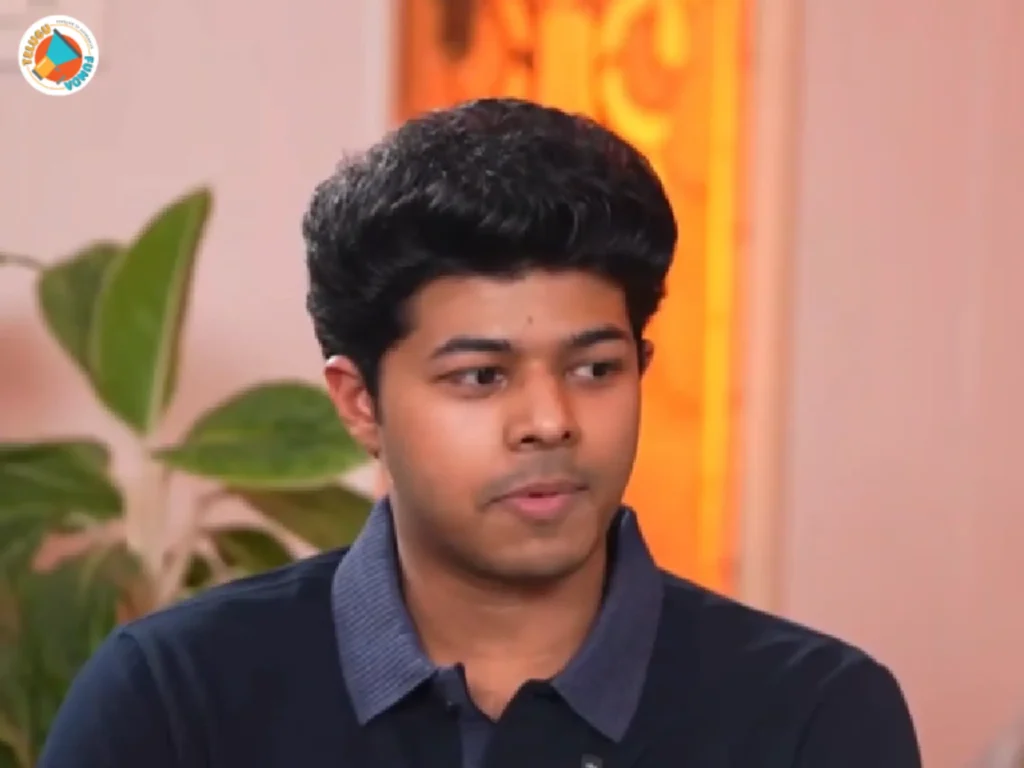
Dr Priyanka, a 28-year-old postgraduate medical student at GSL Medical College, has tragically passed away following a horrific road accident in Rajahmundry. The incident, which occurred on August 3, has sparked widespread public outrage and calls for swift justice.

Priyanka was reportedly riding her scooter near Prasaditya Mall on AV Road in Rajahmundry when a car allegedly driven recklessly by an intoxicated person struck her from behind. According to reports, two youths had reportedly been involved in an argument with mall security before the incident.

The car allegedly rammed into Priyanka’s scooter and ran over her, leaving her critically injured. She was initially taken to a local hospital for emergency treatment. Given the severity of her condition, she was later shifted to Hyderabad for advanced medical care and ventilator support.

Priyanka was subsequently declared brain-dead. She continued to receive treatment at a private hospital in Secunderabad, but her condition remained critical. She has now sadly passed away while undergoing treatment.

The incident has triggered strong reactions from the public, particularly after videos related to the accident circulated widely on social media. Many people have expressed anger over the alleged reckless driving and demanded strict action against those responsible.

Priyanka, who was pursuing her postgraduate medical education, was only 28 and had a promising career ahead of her. Her tragic death has left her family, friends and the medical community devastated.

The incident has once again raised serious concerns over drunk driving, reckless driving and road safety. There is growing public demand for immediate justice and stringent action against those responsible for Priyanka’s death.

Follow Telugu Funda on trending Social Media Platforms for more Cinema, OTT, Political, And Sports updates.
Jason Sanjay, son of Tamil actor and Tamil Nadu Chief Minister Vijay, is all set to make his directorial debut with Sigma, starring Sundeep Kishan in the lead role. Backed by Lyca Productions, the film has already generated curiosity, with Thaman composing the music.

As part of the film’s promotional activities, Jason Sanjay has been opening up about his journey into cinema, his family and the support he received from his parents. In a recent interview, he revealed how his father Vijay encouraged him to pursue filmmaking from a young age.

Vijay Encouraged Jason to Explore Cinema

Jason revealed that his interest in cinema began during childhood, largely influenced by his father’s career. He frequently visited shooting locations and gradually developed a strong fascination for filmmaking.

When Jason decided to pursue cinema-related courses abroad, Vijay reportedly did not question his decision. Instead, he encouraged his son to explore the field and understand what aspect of cinema interested him the most.

Jason recalled that Vijay was among the first people to recognize his passion for filmmaking and give him the confidence to pursue it.

“When I told my father that I wanted to go abroad and study cinema-related courses, he showed no hesitation. He was the first person to give me the green signal,” Jason shared.

According to Jason, Vijay wanted him to gain knowledge and experience before deciding on his career path in the film industry. He said his father was happy to learn that several courses were available in cinema and encouraged him to study and discover what he truly liked.

Jason Sanjay Opens Up About His Mother Sangeeta

Jason also spoke fondly about his mother, Sangeeta. Despite growing older, he said she continues to see him as a child and remains a constant source of encouragement.

He admitted that his busy professional schedule has reduced the amount of time he spends talking to his mother. However, her support continues to play an important role in his life, especially during demanding phases of his work.

Jason also revealed that he values his mother’s opinion when it comes to cinema and is particularly curious to hear her thoughts on Sigma.

“No matter how much I grow up, my mother still sees me as a child. I give importance to my mother’s opinions on matters related to cinema. I am curious to know what she has to say about this film,” he said.

Jason Sanjay Begins a New Chapter With Sigma

With Sigma, Jason Sanjay is stepping into the film industry as a director and beginning a new chapter of his career. The project has attracted considerable attention due to his family background, Sundeep Kishan’s presence and the curiosity surrounding Jason’s directorial vision.

While expectations are naturally high, Jason’s comments about the encouragement he received from Vijay and Sangeeta offer a glimpse into the family support behind his journey into filmmaking.

Follow Telugu Funda on trending Social Media Platforms for more Cinema, OTT, Political, And Sports updates.
Recent Posts

Categories