October 2, 2026

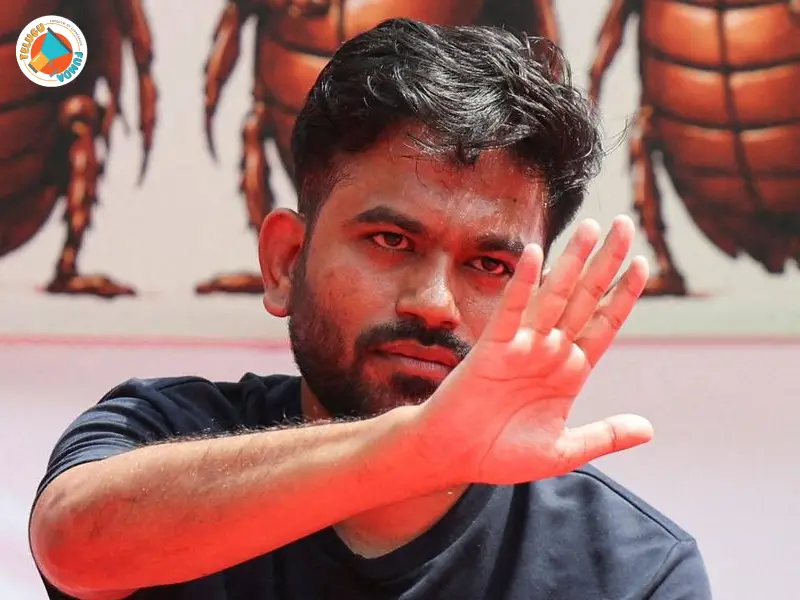
The Cockroach Janta Party (CJP) is back on the streets, and this time its protest has a new target. After its earlier agitation over the NEET and examination-related controversies, the group led by founder Abhijeet Dipke has announced a nationwide protest demanding the resignation of Chief Election Commissioner Gyanesh Kumar.

CJP has announced that the fresh agitation will begin in Mumbai today, with the movement planned to expand to other cities. The group has raised allegations concerning the Election Commission’s handling of electoral rolls and the Special Intensive Revision (SIR) process, and is demanding Kumar’s resignation. These are allegations made by the protesters and are not established findings in themselves.

Speaking ahead of the Mumbai protest, CJP founder Abhijeet Dipke announced that the movement would continue until the Chief Election Commissioner resigns. The group has also indicated plans to take the protest to cities including Goa, Bengaluru and Kolkata before eventually moving towards Delhi.

The Mumbai protest has already triggered a fresh confrontation over permissions. Dipke said Mumbai Police had denied permission for today’s demonstration, while the CJP maintained that it would proceed with its planned agitation. The group has described the protest as a “Jail Bharo Andolan.”

The CJP had earlier gained national attention through its protests demanding the resignation of then Union Education Minister Dharmendra Pradhan over the NEET paper-leak controversy and alleged examination irregularities. The protests at Jantar Mantar drew participation from students and young professionals.

With the movement now taking on the Election Commission, the protest is set to put CJP back in the spotlight. The key focus now will be on the level of public participation and how authorities respond as the agitation moves forward.

Follow Telugu Funda on trending Social Media Platforms for more Cinema, OTT, Political, And Sports updates.

The schedule for the 2027 ODI World Cup has been announced, and India are set for a challenging start to their campaign. With Australia and Pakistan lined up within the first three matches, Indian cricket fans have plenty to look forward to right from the opening week.

The 2027 World Cup will be hosted across South Africa, Zimbabwe and Namibia, with the tournament scheduled to take place from October 2 to November 21.

India have been placed in Group A alongside Australia, Pakistan, Afghanistan, Zimbabwe and one qualifier. Their campaign begins on October 7, when they take on Australia in Cape Town.

Just three days later, India will face arch-rivals Pakistan in Johannesburg on October 10. The high-profile clash is expected to be one of the biggest attractions of the group stage.

India will then take on Afghanistan on October 14 in Tshwane, followed by a match against a qualifier on October 17 in Bloemfontein. The Men in Blue will complete their group-stage campaign against Zimbabwe on October 24 in Victoria Falls.

India’s 2027 World Cup Schedule
October 7 – India vs Australia – Cape Town
October 10 – India vs Pakistan – Johannesburg
October 14 – India vs Afghanistan – Tshwane
October 17 – India vs Qualifier – Bloemfontein
October 24 – India vs Zimbabwe – Victoria Falls

The 2027 ODI World Cup will feature 14 teams and 57 matches. The tournament will follow a revamped format, with teams progressing through the Super Series, Group Stage and Super 7 stages before the knockout matches.

India have been designated A1 for the Super 7 stage. If they progress to that stage, they will face teams from the other group as part of the next phase of the competition.

The semi-finals are scheduled for November 17 and 18, while the World Cup final will be played on November 21 in Johannesburg.

With Australia as their opening opponent and Pakistan arriving just three days later, India’s 2027 World Cup campaign promises a blockbuster start, setting the stage for plenty of excitement even before the knockout rounds begin.

Follow Telugu Funda on trending Social Media Platforms for more Cinema, OTT, Political, And Sports updates.
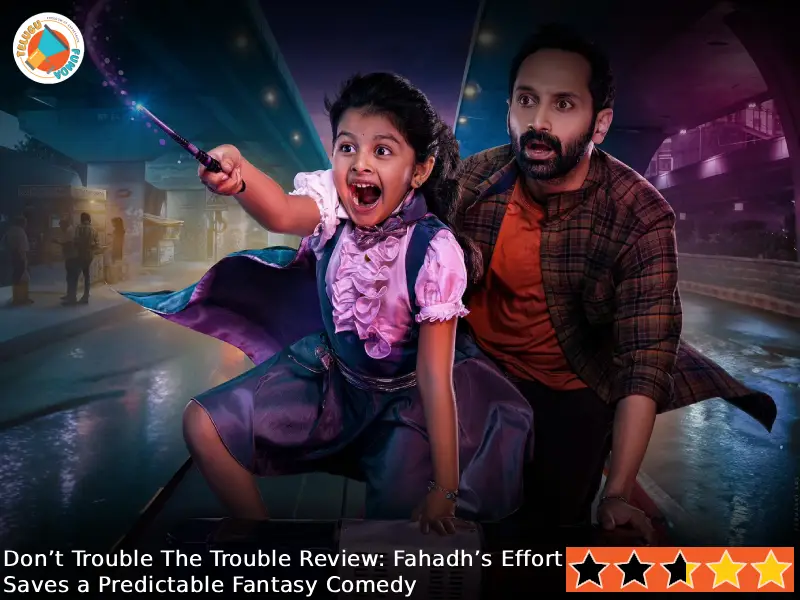
Punchline

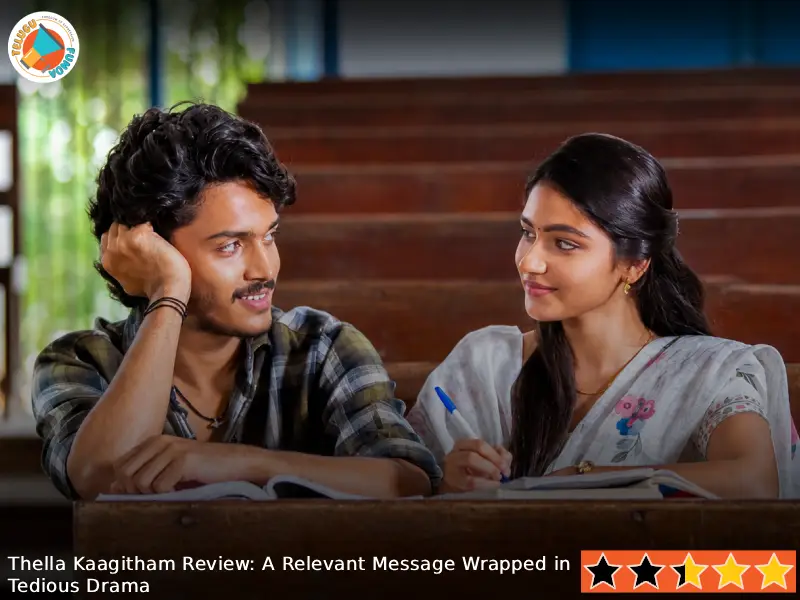
Thella Kaagitham attempts to tackle a sensitive teenage issue with a socially relevant message, but the film struggles to translate its core idea into engaging drama. Despite a passable first half-hour and a confident debut from Bogapathi Nakshatra, the repetitive second half, excessive melodrama and stretched conflict make the film a tedious watch.

Storyline

The film revolves around a teenage boy (Harsh Roshan) and a teenage girl (Bogapathi Nakshatra) who fall in love during their eleventh grade and eventually get intimate. Their lives take an unexpected turn when they are forced to deal with the consequences of their decision.

The story follows their attempts to handle the situation, the fear of informing their parents and the problems that arise as they search for a way out. The film ultimately focuses on the importance of teenagers approaching their parents when they find themselves in difficult situations.

Positives

Passable first 30 minutes
Bogapathi Nakshatra’s confident debut
Ajay’s performance, particularly in the climax
A socially relevant core message
A few good locations captured by the cinematography

Negatives

Tedious second half
Excessive melodrama
Repetitive sequences
Poor music and background score
Conflict point is stretched far beyond what the story can sustain
Comedy does not land consistently
Several characters are underutilised

Technicalities

Vijay Bulganin, who has delivered memorable music for romantic films in the past, disappoints here. None of the songs leave a lasting impression, while the background score also fails to elevate the emotional moments.

Nandu Savarigana’s writing is ordinary, with only a couple of dialogues standing out. The screenplay becomes increasingly repetitive once the central conflict is introduced, making the second half particularly difficult to sit through.

K. V. Guhan’s cinematography is functional and suits the film’s setting. Some of the lush green locations are captured well. Karrhika Srinivas’ editing, however, is a major drawback, especially in the second half, where the film desperately needed tighter pacing.

Director Ramesh Bandreddy deserves credit for attempting to address an important issue involving teenagers and the need for better communication between children and parents. However, the film’s execution falls short. Instead of allowing the message to emerge naturally through the story, the director relies on a voice-over towards the end to explicitly state the intended takeaway.

The film’s initial portions establish the teenage romance reasonably well, but once the main conflict arrives, the narrative gets stuck. The couple repeatedly tries to solve the problem, while the story takes too long to move forward. The lack of strong emotional involvement makes it difficult for the audience to empathise with their situation.

Telugu cinema has explored teenage romance before, with films such as Kotha Bangaru Lokam successfully balancing innocent romance, comedy, music and emotion. Thella Kaagitham deals with a somewhat similar underlying issue, but fails to achieve the same balance. The repeated situations, forced comedy and excessive melodrama ultimately weaken the film.

Harsh Roshan, who was impressive in Court: State vs a Nobody, appears noticeably restrained here. While he has a few decent moments, his overall performance lacks the natural ease seen in his previous film. Bogapathi Nakshatra, on the other hand, makes a confident debut. She looks good, performs well and has a noticeable screen presence.

Ajay delivers a solid performance as a strict but caring father, with his work in the climax being particularly effective. Saranya and Raj Kumar Kasireddy are adequate in their supporting roles, while Deepak Mali manages to generate a few laughs. Goparaju Ramana’s character, however, is underwritten and leaves little impact.

Rating

2.25/5

Final Verdict

Thella Kaagitham starts with a reasonably interesting setup but loses its way once the main conflict begins. The socially relevant message is worthy, but the stretched screenplay, repetitive sequences, weak music and excessive melodrama turn the film into a tedious experience.

Follow Telugu Funda on trending Social Media Platforms for more Cinema, OTT, Political, And Sports updates.
Punchline

Don’t Trouble the Trouble attempts to blend fantasy, comedy and an emotional road adventure, with Fahadh Faasil leading the show alongside young actor Ssara Palekar. While the unusual premise and lead performances offer some enjoyable moments, the film struggles to maintain momentum and emotional impact.

Storyline

Soori (Fahadh Faasil) is an orphan who survives by pulling off clever schemes for quick money. After crossing paths with gangster Aslam Bhai (Mahesh Manjrekar), he lands in serious trouble and is given just two days to arrange ₹25 lakh.

During his desperate search for money, Soori meets Divya (Ssara Palekar), a runaway girl from a wealthy family. Believing Soori to be a powerful magician, Divya asks him to help her. Seeing an opportunity to escape his financial troubles, Soori decides to accompany her.

What begins as a convenient arrangement gradually turns into an unexpected journey as Soori discovers the truth behind Divya’s situation. The rest of the story revolves around their unusual bond, the challenges they encounter and Soori’s gradual change in perspective.

Positives

Fahadh Faasil delivers a sincere and energetic performance.
His comic timing and expressive reactions work well.
His Telugu dialogue delivery is impressive.
Ssara Palekar makes a confident and endearing Telugu debut.
The combination scenes between Fahadh, Ssara, and the beagle are entertaining.
Mahesh Manjrekar makes an impact despite limited screen time.
Saurabh Sachdeva’s unconventional character adds some curiosity.
Kaala Bhairava’s background score adds energy to the lighter moments.

Negatives

The trailers reveal much of the core plot, reducing the surprise factor.
The screenplay struggles to maintain consistent interest.
The central conflict is too thin and becomes predictable early.
The emotional core arrives too late in the narrative.
The second half becomes slow and repetitive.
The police investigation track fails to add much value.
Some comedy relies on repetitive gags.
There are noticeable logical inconsistencies.
Several supporting characters are underutilised.
The editing could have been sharper, with some dragging sequences needing trimming.

Technicalities

Director Shashank Yeleti shows ambition in attempting a fantasy comedy with a fairy-tale flavour, but the execution falls short in several areas. The writing by Hamza Ali needed more depth and stronger emotional beats to make the premise more engaging.

Brad Francis’ cinematography captures the urban backdrop neatly, while Kaala Bhairava’s background score adds energy to the lighter sequences.

Praveen Antony’s editing could have been tighter. Several scenes feel stretched and could have benefited from sharper trimming. The production values are decent and suit the scale of the film.

Rating

2.75/5

Final Verdict

Don’t Trouble the Trouble is an uneven fantasy comedy that delivers entertainment in patches. Fahadh Faasil carries the film with a committed performance, while Ssara Palekar makes a pleasant impression in her Telugu debut. However, predictable writing, a slow second half, repetitive comedy, and weak emotional stakes hold the film back. Children may connect better with its lighthearted magical premise, while adult viewers may find only a few portions genuinely engaging.

Follow Telugu Funda on trending Social Media Platforms for more Cinema, OTT, Political, And Sports updates.

Recent Posts

Categories