YSRCP

Janasena Local Body Elections: Unofficial seat-sharing numbers circulating on social media could create unrealistic expectations among party cadres and trigger unnecessary differences within the NDA alliance.

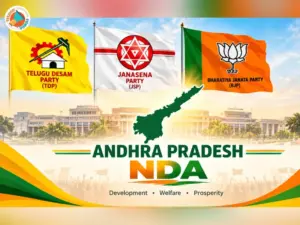
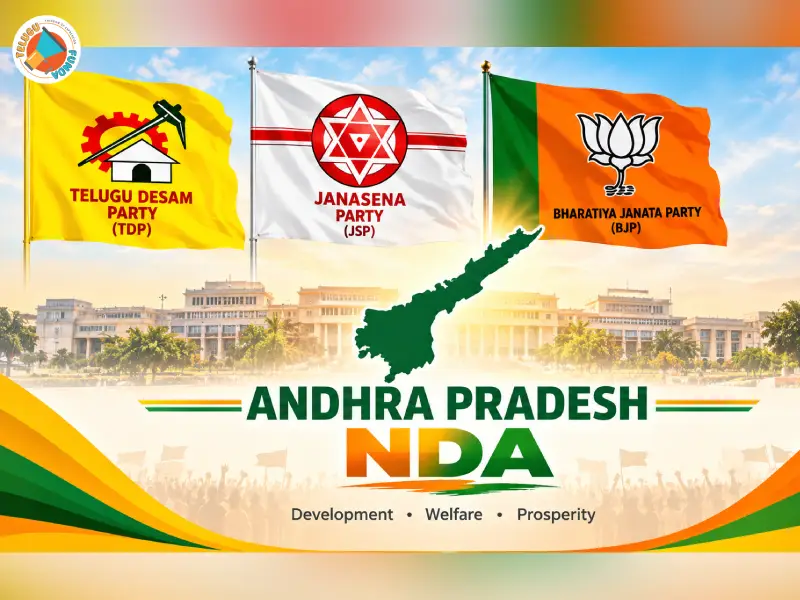
Seat-sharing discussions between the Telugu Desam Party (TDP), Janasena and BJP are reportedly underway ahead of the upcoming local body elections in Andhra Pradesh. Amid these developments, several unconfirmed figures are circulating on social media, raising questions about Janasena’s expected share in the alliance.

Chief Minister N. Chandrababu Naidu recently met Janasena Minister Nadendla Manohar and senior BJP leader Madhav to discuss the issue. However, the alliance partners have not officially announced any seat-sharing formula so far.

Janasena Seat-Sharing Formula Goes Viral

According to claims circulating on social media, Janasena could receive 35% of local body seats, 6–8 Mayor posts, around 40 Municipal Chairperson posts and approximately 1,800 ward seats. However, the authenticity of these figures remains unverified, and there is no official confirmation from the alliance leadership.

Despite the lack of clarity, some enthusiastic Janasena supporters are sharing these numbers as though they represent a confirmed agreement. The source of these claims also remains unclear.

2024 Alliance Talks Offer a Cautionary Lesson

The situation brings back memories of the 2024 elections, when various predictions about Janasena’s seat share circulated before the final announcement. Expectations ranged from a 50% share to claims of 70 seats and later 50 seats. Ultimately, Janasena contested 21 Assembly seats and two Lok Sabha seats as part of the alliance.

The current speculation could create a similar situation if supporters begin treating unofficial numbers as confirmed decisions. If the final allocation falls short of these expectations, disappointment among the cadre could be significant.

Why Premature Seat-Sharing Claims Could Hurt Janasena

With the local body election schedule expected to be announced on the 14th, spreading unverified seat-sharing figures at this stage could do more harm than good. Such claims may raise expectations unnecessarily, demoralise party workers and create avoidable friction among alliance supporters.

Seat-sharing decisions involve discussions and negotiations between party leaderships. Until an official announcement is made, predicting the final numbers serves little purpose.

YCP Could Benefit From Alliance Confusion

Unnecessary speculation could also provide an opportunity for the Yuvajana Sramika Rythu Congress Party (YSRCP), commonly known as YCP, to exploit any confusion or differences within the alliance.

For now, Janasena supporters would be better served by waiting for an official announcement rather than circulating unverified figures. Maintaining realistic expectations and avoiding premature conclusions could help preserve cadre morale and unity among the alliance partners.

Until the TDP, Janasena and BJP officially reveal the seat-sharing formula, patience is essential. Unconfirmed claims may generate temporary excitement, but if expectations are not met, the resulting disappointment could prove costly for the alliance.

Follow Telugu Funda on trending Social Media Platforms for more Cinema, OTT, Political, And Sports updates.
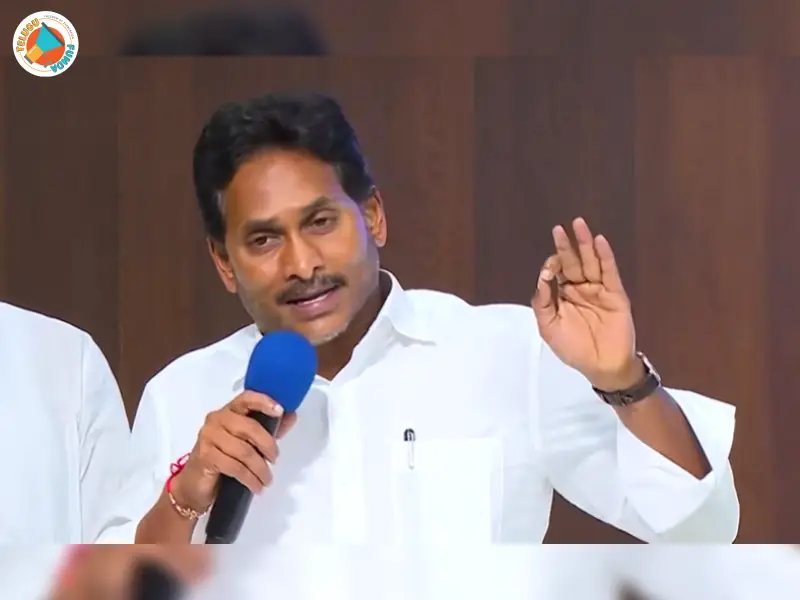
Andhra Pradesh is witnessing a fresh political battle over credit as the first phase of the historic Veligonda Project is set to be inaugurated by Chief Minister N. Chandrababu Naidu on Monday. While the coalition government is presenting the project as a major irrigation milestone, former Chief Minister YS Jagan Mohan Reddy has claimed that the credit for its completion largely belongs to his father, the late YS Rajasekhara Reddy, and his YSR Congress Party government.

Jagan Claims Credit for Veligonda Project

Jagan took to X with a detailed post highlighting the history of the Veligonda project and seeking to attribute much of its progress to successive YSR-led governments.

He pointed out that the project was originally conceived decades ago and alleged that despite the foundation stone being laid during Chandrababu Naidu’s earlier tenure in 1996, significant progress remained limited for several years.

According to Jagan, the Jala Yagnam initiative launched during YS Rajasekhara Reddy’s tenure played a crucial role in developing the project’s core infrastructure, including dams, canals and the twin underground tunnels.

Jagan Highlights Final Tunnel Work

Jagan also claimed credit for his own government, stating that it undertook one of the most challenging remaining components of the project the excavation of the final 10.5 kilometres of the twin tunnels.

He argued that these works were crucial to bringing the long-pending project closer to completion and questioned the coalition government’s claims surrounding the project.

R&R Issue Becomes Another Flashpoint

The former Chief Minister also criticised the Chandrababu Naidu-led government over the Rehabilitation and Resettlement (R&R) process.

Jagan alleged that the government had failed to adequately address the concerns of displaced villagers for more than two years, leaving some families waiting for compensation. He accused the ruling alliance of focusing on publicity while seeking credit for a project developed over multiple governments.

Chandrababu Government Pushes Project Towards Finish Line

The ruling coalition, however, maintains that its government played a critical role in removing the remaining hurdles and taking the Veligonda project towards completion.

In recent months, the government has reportedly invested more than ₹2,400 crore on essential works, including feeder canals, head regulators and canal lining.

The administration has also focused on clearing long-pending R&R packages, with compensation being disbursed to displaced families. The government has positioned these measures as essential steps to enable the reservoir to be filled while addressing the concerns of affected communities.

Veligonda Project Turns Into Political Credit Battle

The Veligonda Project is now more than an irrigation milestone it has become another major political credit battle between the TDP-led coalition and YSRCP.

With Chandrababu Naidu set to inaugurate the first phase, the coalition government is highlighting the expenditure and final-stage works completed under its tenure, while Jagan is stressing the contributions of YS Rajasekhara Reddy and his own administration.

The project is expected to provide drinking water to fluoride-affected villages and support irrigation across thousands of acres in the drought-prone regions of Prakasam, Markapuram, Nellore and Kadapa, making its completion politically and economically significant for Andhra Pradesh.

Follow Telugu Funda on trending Social Media Platforms for more Cinema, OTT, Political, And Sports updates.

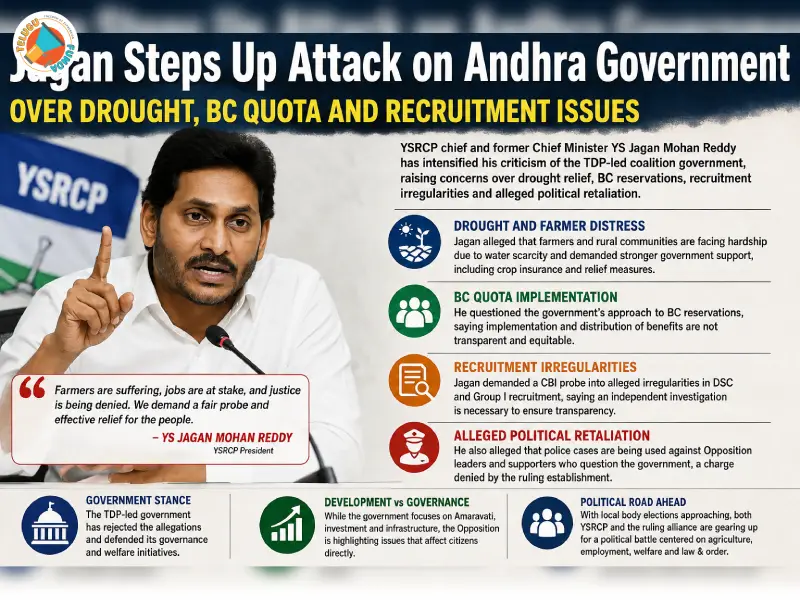
Amaravati: YSR Congress Party (YSRCP) president and former Andhra Pradesh Chief Minister YS Jagan Mohan Reddy has intensified his criticism of the TDP-led coalition government, raising concerns over drought relief, Backward Classes (BC) reservations, recruitment procedures and alleged political retaliation against Opposition supporters.

Jagan has recently targeted the government over the drought situation in parts of Andhra Pradesh, stating that farmers and rural communities need stronger support. The YSRCP has called for effective measures to address water shortages, crop-related concerns, insurance support and relief for affected farming communities.

The government, however, has maintained that it is taking necessary steps to address agricultural and welfare-related challenges. The dispute has largely centred on the adequacy and implementation of relief measures, with both sides presenting contrasting political narratives.

BC Reservation Becomes Key Political Issue

The implementation of BC quota-related measures has also emerged as a major point of contention. Jagan has questioned aspects of the government’s approach, while the ruling coalition has sought to project itself as committed to strengthening BC representation.

With Backward Classes forming a significant section of Andhra Pradesh’s electorate, reservation and representation issues carry considerable political importance. The implementation and distribution of benefits are therefore likely to remain under close scrutiny.

YSRCP Raises Questions Over Recruitment

Public recruitment is another major issue being highlighted by the Opposition. Jagan has demanded a CBI investigation into alleged irregularities in DSC and Group I recruitment, arguing that an independent probe is needed to establish whether any wrongdoing took place.

The issue has attracted attention among job aspirants and unemployed youth across the state. Teacher recruitment, in particular, remains politically sensitive because of the large number of candidates involved and its impact on government education.

The YSRCP has sought to use the recruitment controversy to question the government’s handling of selection procedures, while the ruling establishment has rejected the Opposition’s political allegations and defended its governance record.

Political Tensions Continue

Jagan has also alleged that police cases are being used against Opposition leaders and supporters who criticise the government. The ruling side has disputed these allegations, adding to the wider political confrontation between the TDP-led coalition and YSRCP.

The TDP coalition came to power following the 2024 Assembly elections, while the YSRCP was reduced to a much smaller presence in the state Assembly. Since then, the Opposition has been attempting to rebuild its organisational strength and regain political momentum by focusing on issues affecting citizens directly.

Drought and Employment Likely to Remain Key Issues

Agriculture remains a crucial political issue in Andhra Pradesh, given the state’s large rural population and dependence on irrigation and seasonal rainfall. Prolonged water shortages can have a direct impact on crop production, household incomes and rural employment.

Similarly, government recruitment is expected to remain a major concern among young people. Protests, recruitment disputes and demands for transparency could continue to put pressure on the government.

At the same time, the coalition government is highlighting its development agenda, including Amaravati, infrastructure expansion, industrial investment and long-term economic growth plans.

This has created two contrasting political narratives in the state: the government’s emphasis on development and future investment, and the Opposition’s focus on immediate governance, employment, agriculture and welfare concerns.

The political debate is expected to intensify as Andhra Pradesh moves towards local body elections. While the YSRCP will seek to strengthen its grassroots network, the ruling alliance will look to consolidate the political advantage gained in the 2024 Assembly elections.

Issues including agriculture, employment, BC reservations, welfare delivery and law and order are likely to remain central to the political contest in the months ahead.

Follow Telugu Funda on trending Social Media Platforms for more Cinema, OTT, Political, And Sports updates.

Recent Posts

Categories