The State Bank of India (SBI) is investigating a suspected data leak after personal information linked to 3,897 customers was identified in a dataset found on the dark web. The incident has raised concerns about potential cyber fraud and the misuse of customer details.
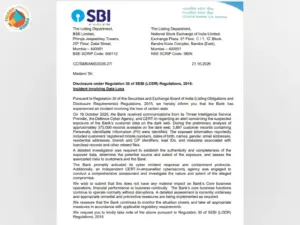
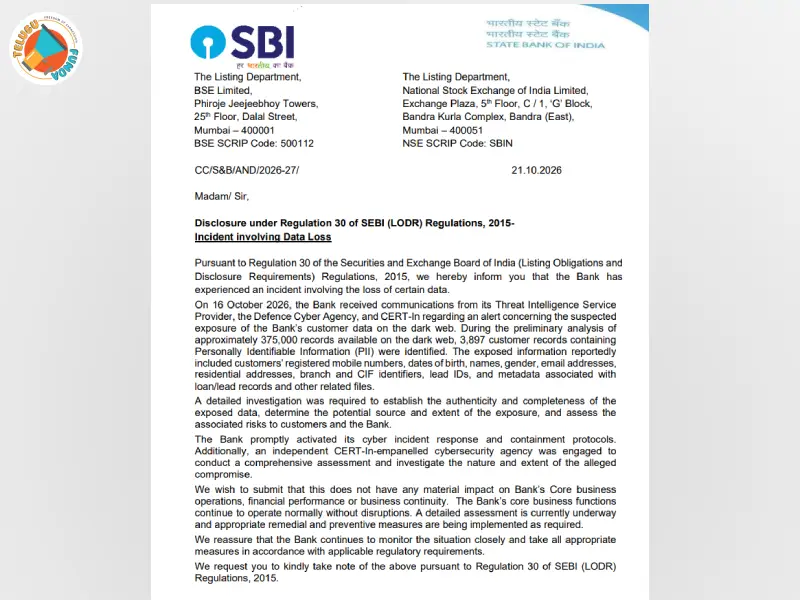
In a stock exchange filing dated October 21, SBI stated that its preliminary examination of around 3.75 lakh records available on the dark web identified 3,897 records containing personally identifiable information.
The exposed information reportedly includes customers’ names, gender, registered mobile numbers, dates of birth, email addresses and residential addresses. The records also contain branch details, Customer Information File (CIF) identifiers and metadata related to loan applications and leads.
SBI said it received alerts about the suspected exposure on October 16 from its threat intelligence service provider, the Defence Cyber Agency and CERT-In. The bank has activated its cyber incident response procedures and appointed an independent cybersecurity agency to investigate the matter.
The bank also clarified that the incident has had no material impact on its business operations, financial performance or business continuity. Its core banking services continue to function normally.
SBI Data Leak: Are Your Bank Accounts at Risk?
The suspected data leak does not automatically mean that customers’ bank accounts have been hacked or that money has been stolen. The preliminary findings concern personal information and loan-related records, and there is no confirmation that account passwords, PINs or transaction credentials have been compromised.
However, cybercriminals could misuse the exposed information to carry out targeted phishing attacks and banking scams. Fraudsters may impersonate bank officials and use genuine customer details to make their calls or messages appear trustworthy.
Customers should remember that knowing their name, mobile number or loan details does not prove that a caller represents SBI.
How Could the Leaked Data Be Misused?
Personal information can be exposed through various systems, including loan processing platforms, employee email accounts, shared storage systems and third-party service providers.
Possible exposure routes include compromised employee or vendor credentials, phishing attacks, information-stealing malware and incorrectly configured storage systems or application programming interfaces (APIs).
However, the exact source of the suspected SBI data leak has not yet been established. Investigators must determine whether the information originated from the bank’s systems, a third-party service provider or another source.
SBI Data Leak: 6 Safety Measures Every Customer Should Follow
SBI account holders should take the following precautions to reduce the risk of financial fraud:
Never share OTPs, PINs or passwords: Never disclose these confidential credentials to an unsolicited caller, even if they claim to represent SBI.
Monitor bank transactions: Keep SMS and email alerts enabled and report unfamiliar transactions immediately.
Avoid suspicious links: Access SBI services through its official website, mobile application or verified customer support channels.
Check your credit report: Look for unfamiliar loans, credit cards or credit enquiries that you did not authorise.
Secure Aadhaar biometrics: Consider locking biometric authentication through UIDAI’s official channels if you do not need to use it.
Report suspected fraud quickly: Contact SBI through official channels and call India’s cybercrime helpline at 1930 or report the incident at cybercrime.gov.in.
Customers should never transfer money, install unknown applications or share confidential information because someone claims their bank account is in danger.
What Is SBI Doing About the Data Leak?
SBI has initiated an investigation to establish the authenticity, source and extent of the exposed information. The bank is also expected to identify any vulnerabilities and take appropriate remedial and preventive measures based on the findings.
The response should include identifying affected customers, securing potentially compromised systems, reviewing third-party access and strengthening fraud monitoring to detect attempts to misuse customer information.
SBI Data Leak: What Customers Should Know
The investigation into the suspected exposure is ongoing, and the full extent of the incident remains unclear. While SBI has confirmed that its core business operations continue normally, customers should remain vigilant against suspicious calls, messages and emails.
The key takeaway: Do not panic or assume your account has been hacked. Protect your banking credentials, verify unexpected requests independently and report any suspected fraudulent activity without delay.
Follow Telugu Funda on trending Social Media Platforms for more Cinema, OTT, Political, And Sports updates.