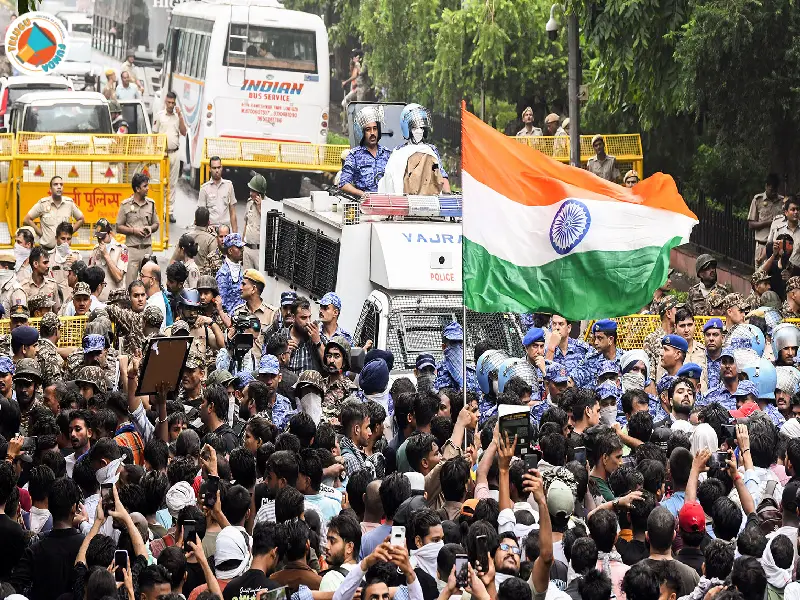
The protests over the alleged NEET examination irregularities in New Delhi have once again ignited a nationwide political debate. While students and activists have been demanding accountability over the examination controversy, another discussion has emerged over how several international media organizations have reported the developments.
A section of observers argues that some foreign media reports have gone beyond reporting the protests themselves and have framed the issue as part of a much broader political and governance crisis in India. According to these critics, student demonstrations, opposition political campaigns, and broader debates about democracy have often been presented together, creating an impression that extends beyond the immediate issue of the NEET controversy.
Student Protest or Political Crisis?
The demonstrations at Jantar Mantar primarily focused on allegations surrounding the NEET examination and demands for accountability from the government. Alongside these protests, other political developments—including opposition demands and separate demonstrations on unrelated issues also took place in the national capital.
Critics of some international coverage claim that these separate events were presented together in a manner that blurred the distinction between student-led protests and political campaigns.
Questions Over Foreign Media Coverage
Several international publications reportedly described the protests as increasing political pressure on the Indian government. However, critics argue that portions of these reports may have linked student grievances with broader political narratives, including discussions on governance, democracy, unemployment, and human rights.
According to these observers, such reporting risks creating the perception that the NEET protests were primarily aimed at challenging the central government politically, rather than focusing on alleged examination irregularities.
Debate Over Headlines and Context
Some commentators have questioned whether headlines used by international media accurately reflected the core demands of the protesting students.
They argue that while student organizations sought action over the examination controversy, political parties later raised separate demands against the government. Combining these developments in a single narrative, they say, may leave international audiences with an incomplete understanding of the sequence of events.
Social Media Misinformation Adds to Confusion
The debate has also been fueled by viral social media posts that allegedly attributed false claims to reputed international news agencies. Some posts reportedly circulated fabricated narratives suggesting that senior Indian leaders had ordered violent action against protesters claims for which no credible evidence has been presented.
Fact-checkers and media observers have repeatedly cautioned that such misleading content can spread rapidly during politically sensitive events and should be verified before being shared.
The Importance of Context
Media analysts note that protests are often covered differently by domestic and international news organizations depending on editorial priorities and target audiences. However, they emphasize that factual accuracy and proper context remain essential while reporting events involving public protests and political developments.
Supporters of this view argue that criticism of the government’s handling of protests is a legitimate part of journalism, but caution against presenting separate political developments as though they are part of a single movement without sufficient evidence.
A Larger Debate
The controversy surrounding international coverage of the NEET protests has opened a wider debate about global media narratives, editorial framing, and the responsibility of news organizations to distinguish verified facts from political interpretation.
As discussions continue, media experts stress that readers should compare reports from multiple credible sources, verify claims independently, and distinguish between factual reporting, analysis, and opinion before forming conclusions.
Follow Telugu Funda on trending Social Media Platforms for more Cinema, OTT, Political, And Sports updates.