
![1727184735162_logo new 01[1]](https://telugufunda.com/wp-content/uploads/2025/04/cropped-1727184735162_logo-new-011-1.png)
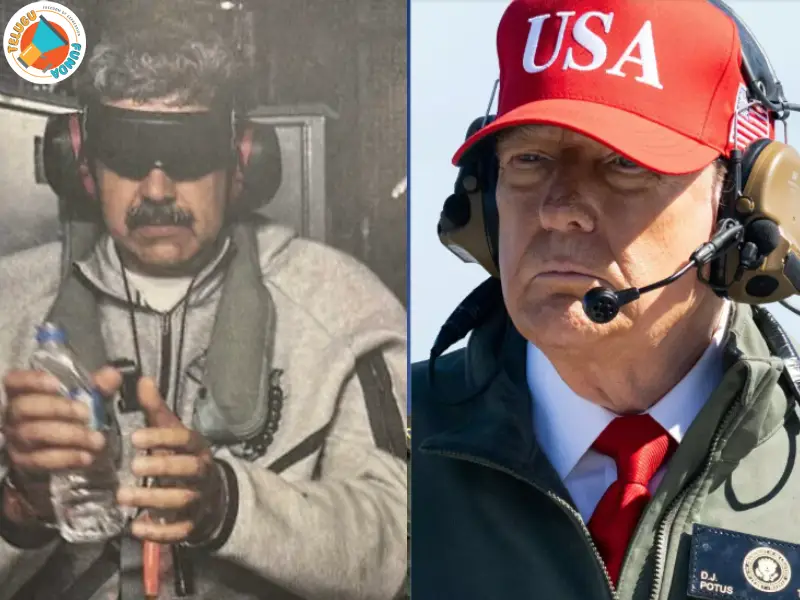
How Did the U.S. Detain a Sitting President? What Really Happened Behind the Scenes?
How did an operation of this scale unfold in Venezuela? How did the United States allegedly detain a sitting president and take him to America? What happened behind the scenes and does a superpower have the right to do anything it wants?
These questions have now become a major topic of global debate.
In today’s world, every nation is extremely vigilant about its airspace security. Even a small unidentified drone or balloon entering sovereign airspace is often shot down immediately. The world recently witnessed how U.S. fighter jets tracked and destroyed a Chinese surveillance balloon that entered American airspace.
Against this backdrop, many are questioning: how could U.S. military aircraft allegedly enter Venezuelan airspace, reach the capital, detain the country’s president, and leave without resistance? Why didn’t radar systems respond? Why were Venezuela’s air defenses silent? What is the real secret behind this alleged operation?
A Repeat of the Abbottabad Model?
The situation has drawn comparisons with the 2011 Abbottabad operation in Pakistan, when U.S. forces conducted a covert mission that killed Al-Qaeda leader Osama bin Laden. At the time, the Obama administration claimed that Pakistan’s government and military were not informed.
However, international analysts questioned whether such an operation could have occurred without at least silent cooperation from within Pakistan’s security establishment. Many now argue that a similar “Pakistan model” may have been repeated in Venezuela this time involving President Nicolás Maduro.
The Alleged Arrest of Venezuela’s President: How Did It Happen?
According to claims circulating widely, U.S. forces detained Venezuelan President Nicolás Maduro and his wife and transported them to the United States, where they were reportedly presented before a New York court. The alleged operation is said to have involved U.S. aircraft bypassing Venezuela’s air defense systems and entering the capital directly.
Critics argue that this would not have been possible without internal support from sections of the Venezuelan military. More than brute force, it was allegedly “inside cooperation” that made the mission successful. The silence of Venezuela’s defense establishment has only intensified speculation.
Where Were the Military, Police, and the People?
If a sitting president was indeed detained, why did Venezuela’s military, police, and citizens not respond? Why was there no visible resistance? How could an elected president be removed so easily?
These questions have triggered intense discussions about internal betrayal, power struggles within the armed forces, and the fragility of national security when internal divisions exist.
American Imperialism or Strategic Intervention?
While the U.S. justified the bin Laden operation as part of the global war on terror, critics argue that Venezuela is a different case altogether. They claim the alleged operation was driven by political and economic interests particularly Venezuela’s vast oil reserves and America’s long-standing desire to influence governments in Latin America.
According to this view, Washington seeks to remove regimes that do not align with its interests and replace them with favorable leadership.
A “Selective Democracy”?
Is it justified for one country to arrest the democratically elected leader of another under its own laws? Is this counterterrorism or the overthrow of an elected government?
These questions have fueled accusations that the United States applies democracy selectively, respecting sovereignty only when it suits its interests. For critics, the alleged Venezuela episode stands as evidence of American overreach and disregard for national sovereignty.
Same Strategy, Different Country?
From Abbottabad in Pakistan to the alleged operation in Venezuela, critics argue that the strategy remains the same:
secure internal military cooperation, dominate airspace, neutralize the target, and exit.
The lesson, they say, is clear no matter how advanced a country’s defense systems are, national security collapses when internal betrayal or covert collaboration exists.
Whether proven or not, the Venezuela controversy has reignited a global debate on sovereignty, superpower dominance, and the true limits of international law in a world shaped by power politics.
Follow Telugu Funda on trending Social Media Platforms for more Cinema, OTT, Political, And Sports updates.


